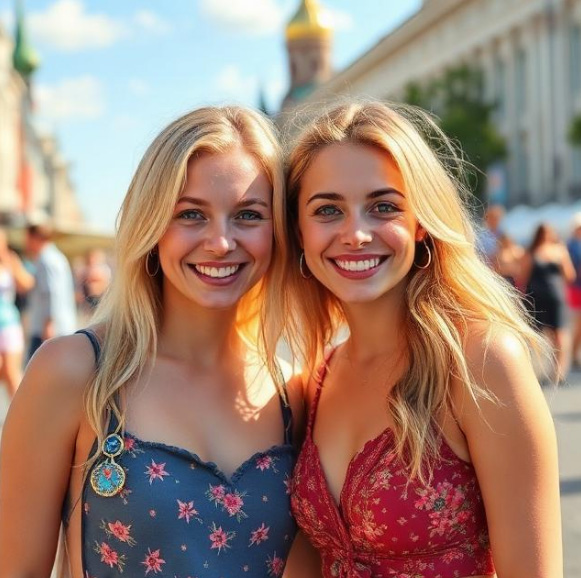
Moscow, the sprawling, vibrant heart of Russia, is a city where history weighs as heavily as the golden domes of its cathedrals and where contemporary energy pulses through its vast boulevards. More than just a political capital, it’s a grand, layered tapestry of tsarist grandeur, Soviet might, and modern Russian verve. For any traveler, navigating its immense scale can be daunting. Here is a guide to the essential sights that capture the soul of this unforgettable metropolis.
The Irresistible Core: The Kremlin and Red Square
No visit can begin anywhere else. Red Square is the iconic, cobbled stage upon which Russian history has played out for centuries. Flanked by architectural marvels, it’s a breathtaking open space. At one end stands the kaleidoscopic St. Basil’s Cathedral, with its swirling, candy-colored onion domes—a symbol of Russia itself. Opposite lies the formidable GUM department store, a stunning 19th-century arcade now housing luxury boutiques under its graceful glass roof.
Dominating the square is the Kremlin, the medieval fortress that is the seat of Russian power. Inside its high, crenellated walls, you’ll find a world of treasures: ancient cathedrals where tsars were crowned (the Cathedral of the Assumption is a highlight), the imposing Tsar Bell and Tsar Cannon, and the solemn State Kremlin Palace. A visit to the Armoury Chamber is a must, home to an unimaginable collection of imperial carriages, Fabergé eggs, and coronation robes.
Spiritual and Cultural Pillars
A short walk from the Kremlin, Christ the Savior Cathedral is a story of resurrection. The world’s tallest Orthodox church, it was dynamited under Stalin and rebuilt in the 1990s. Its magnificent, glittering interior is awe-inspiring.
For art lovers, the Tretyakov Gallery is non-negotiable. Its comprehensive collection is a journey through the soul of Russian art, from mysterious medieval icons, including Andrei Rublev’s revered Trinity, to the dramatic canvases of the 19th-century Peredvizhniki (Wanderers) like Repin and Surikov.
On the opposite end of the spectrum, the Pushkin State Museum of Fine Arts offers a world-class collection of European masters, from ancient Egyptian artifacts to Rembrandt, Monet, Van Gogh, and Picasso.
Parks, Perspectives, and the Soviet Legacy
Moscow is a surprisingly green city. Gorky Park is its premier modern recreation space, a hub for cycling, open-air dancing, café culture, and winter ice-skating. For unparalleled panoramic views, head to Sparrow Hills (Vorobyovy Gory). From the observation platform, you can gaze across the Moscow River at the city’s staggering skyline, dominated by the monumental Moscow State University—one of Stalin’s Gothic “Seven Sisters” skyscrapers.
To understand the 20th century, explore VDNKh (Exhibition of Achievements of National Economy), a colossal Stalinist theme park celebrating Soviet industrial and scientific might. Its grandiose pavilions and the iconic Worker and Kolkhoz Woman statue embody an era. Nearby, the Moscow Metro is not just transport; it’s a moving art museum. Stations like Mayakovskaya (art deco mosaics), Komsomolskaya (baroque chandeliers), and Novoslobodskaya (stained glass) are breathtaking architectural feats.
Beyond the Center: Islands and Estates
For a quieter charm, visit the Izmailovo District. Its Kremlin market is a fantastic (and tourist-friendly) place to shop for matryoshka dolls, amber, and Soviet memorabilia. On weekends, it transforms into a vibrant artisan fair.
To escape the urban buzz, the Kolomenskoye Estate offers a pastoral retreat. Once a royal country seat, its UNESCO-listed Ascension Church and reconstructed wooden palace of Tsar Alexei Mikhailovich are set in beautiful parkland overlooking the river.
Moscow After Dark: From Ballet to Bars
As dusk falls, Moscow’s cultural engines hum. Secure a ticket to the Bolshoi Theatre, a temple of ballet and opera, to witness world-class performances in its recently restored, opulent auditorium. For a more contemporary beat, explore the districts of Patriarch’s Ponds (literary and chic), Krasny Oktyabr (a former factory island turned hipster hub with bars and galleries), or Winzavod, a leading center for contemporary art.
Essential Travel Tips
- Plan by District: Moscow is vast. Group sights geographically (e.g., Kremlin/Red Square, Arbat/Patokhonka, Park Kultury) to save time.
- Master the Metro: It’s efficient, beautiful, and the best way to travel. Download the Yandex Metro app.
- Embrace the Cuisine: Go beyond stereotypes. Enjoy hearty soups like borscht, delicate pelmeni (dumplings), and explore the thriving café and fine-dining scene.
Moscow does not reveal itself all at once. It demands exploration, a willingness to wander, and an appreciation for its profound contrasts. From the silent reverence inside a medieval cathedral to the neon buzz of Tverskaya Street, it is a city that speaks of a powerful past while rushing headlong into the future. To see Moscow is to witness the ongoing story of Russia itself—complex, majestic, and utterly compelling.