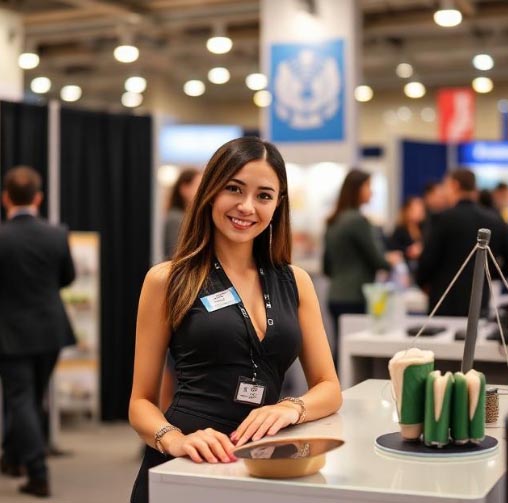
The hum of a major trade show floor is a unique symphony: the sharp click of networking handshakes, the low rumble of machinery demonstrations, and the rapid-fire exchange of technical specifications. At the heart of the action sits the Main Stage—the central hub where keynotes are delivered, industry awards are announced, and market-shaping deals are born. For international exhibitors, the Main Stage is high-stakes territory. For a Russian manufacturer pitching to an English-speaking investor, or a Western tech giant unveiling a product for the Eurasian market, the difference between a handshake and a misunderstanding often rests on one person: the Russian-English interpreter at the exhibition centre.
In the bustling ecosystem of a modern exhibition centre, these linguists are not merely translators; they are the unsung architects of global commerce. As demand for Russian-English support surges at major events—from manufacturing technology shows to chemical expos—understanding their role is crucial for any business looking to expand its reach
The Main Stage Dynamic: Conference vs. Booth Support
Interpreters at large-scale exhibition centres operate in two distinct, high-pressure environments, and the Main Stage represents the pinnacle of difficulty.
The Main Stage & Keynote Sessions (Simultaneous Interpreting)
The Main Stage is where “simultaneous” interpreting reigns supreme. Imagine a keynote speaker at an Executive Perspectives session discussing the nuances of supply chain economics. As they speak, the interpreter sits in a sound-proof booth, listening through headphones and speaking into a microphone, rendering English into Russian in real-time with only a two-second delay. This requires immense cognitive stamina. The interpreter must anticipate the speaker’s next point, manage complex Russian sentence structures, and maintain the speaker’s tone—all while ignoring the roar of the audience’s applause.
For large-scale multilingual conferences, professional Russian interpreting services come equipped with full technical support, including booth setups and audio equipment, ensuring seamless delivery.
The Exhibition Booth (Consecutive & Liaison Interpreting)
Away from the Main Stage, at the booths of exhibitors ranging from material handling innovators to chemical manufacturers, a different service takes over. Here, “consecutive” interpreting is standard. The exhibitor speaks, pauses, and the interpreter conveys the message to the Russian visitor. While slower than simultaneous, this method allows for precise technical accuracy—critical when discussing everything from “hydraulic high precision toolholders” to chemical compounds.
A real-world example comes from a job posting for the Interlakokraska show in Moscow, where an exhibitor explicitly sought a local Russian speaker to provide “clear, accurate explanation of our chemical to Russian-speaking visitors” and provide “immediate English summaries of important leads”. This highlights the direct sales role these interpreters play in exhibition centre environments.
Why Russian-English Interpreters Are Essential for Success
Trade shows at major exhibition centres are relationship-driven, and trust is built through clarity. Professional Russian interpreters offer value that automated tools cannot match.
Precision with Jargon
Every industry has its own lexicon. In plastics and rubber manufacturing, for instance, confusing terms like “injection molding” with “extrusion technology” could break a machine—or a deal. Professional interpreters prepare in advance, often spending weeks studying technical documents, product glossaries, and industry trends to ensure that complex technical data is rendered accurately. Events like Rosplast in Moscow and Chinaplas in Shanghai demonstrate how crucial this preparation is for technical fields.
Cultural Intelligence
Russian business communication can be more direct than Western styles, and negotiation pacing differs. Interpreters must navigate the nuances of formality—the shift from informal to formal address—and non-verbal cues to ensure neither party feels alienated. As noted by interpreters working major shows, “Business negotiations often involve subtle nuances… Russian business culture tends to emphasize directness and detailed discussions, while English-speaking participants may focus on building long-term relationships”. A skilled interpreter acts as a cultural bridge, balancing these differences.
The “Hot Lead” Filter
As seen in the Interlakokraska job requirements, a booth interpreter often doubles as a sales assistant. They don’t just translate words; they filter intent. They summarize technical questions so the principal can respond on the spot, ensuring that a serious Russian buyer isn’t kept waiting while a translator fumbles for terminology. This efficiency directly impacts lead generation and conversion.
Real-World Impact: Rosplast and Beyond
The recent Rosplast Moscow International Exhibition for machinery and materials in the plastics industry serves as a compelling case study. With participants from over 30 countries, English-Russian interpreters enabled numerous successful interactions, facilitating agreements ranging from machinery exports to joint technology ventures. One U.S. exhibitor commented: “The Russian market holds immense potential… Thanks to the interpreters, we were able to communicate our value proposition clearly and establish meaningful connections”.
The demand for Russian-English interpreters extends across major exhibition centres worldwide. Services are available at Fira de Barcelona Gran Via for ICE Barcelona, at the Toronto Congress Centre for CMTS, and across various Asian venues for events like Chinaplas, where Russian interpretation is formally priced and offered alongside other major languages.
Planning Ahead: Booking Your Interpreter
Given the high demand and specialized nature of the work, securing an interpreter well in advance is essential. Major shows like Chinaplas recommend early reservation, and professional interpreting agencies offer flexible packages ranging from hourly booth support to full-day conference coverage.
When booking, consider:
- Technical expertise: Does the interpreter have experience in your specific industry?
- Certification: Are they a member of a recognized professional body?
- Availability: Can they commit to the full show schedule, which often runs 8-10 hour days?
As global industries continue to seek partnerships across linguistic borders, the role of the Russian-English interpreter at Main Stage exhibition centres will only grow in importance. These professionals do far more than translate words—they facilitate understanding, build trust, and enable collaborations that shape the future of international commerce. For any business looking to make an impact on the global stage, a skilled interpreter is not a luxury; it is the voice behind the deal.
