MOSCOW – The roar of afterburners shakes the tarmac at Zhukovsky International Airport. Above, a Su-57 fighter traces a perfect arc against the pale Russian sky. Below, inside the sprawling exhibition halls of the International Aviation and Space Salon (MAKS), the air is filled with a different kind of intensity: the urgent whisper of technical negotiations, the clatter of sealed briefcases, and the quiet, precise voice of the exhibition interpreter.
Alongside the gleaming airframes and rotating radar domes, these professionals work in the shadows of machines worth hundreds of millions of dollars. From the static display lines of MAKS (one of the world’s top five aviation forums, alongside Le Bourget and Farnborough) to the exhibition halls of HeliRussia and the NAIS (National Aviation Infrastructure Show), the Russian interpreter has become the most critical component for foreign manufacturers seeking to enter the Russian aerospace sector.
In an industry where a mistranslated engine tolerance or a misunderstood airworthiness certification can derail a deal worth billions of rubles, these are not simply linguists. They are “aviation-grade” gatekeepers.
The “Aviate, Navigate, Communicate” Principle
The requirements for interpreters at Moscow’s aviation trade shows are exceptionally rigorous. Unlike consumer exhibitions where general fluency may suffice, the aerospace sector demands a rare hybrid: an engineer who speaks languages, or a linguist with a technical addiction.
“At an event like MAKS, which attracts over 570,000 participants and delegations from countries including China, Saudi Arabia, and Turkey, the audience is elite, and the terminology is lethal,” notes a profile from a Moscow-based service provider. The interpreter must possess three distinct skill sets:
1. The Technical Lexicon
They must be fluent not just in English and Russian, but in the specific jargon of the industry. This includes terminology related to avionics, airframe maintenance, MRO (Maintenance, Repair, and Overhaul), UAVs (Unmanned Aerial Vehicles), thrust-to-weight ratios, and composite materials.
Training resources specifically advise that while a standard translator might struggle with the difference between a turbofan and a turboprop, an aviation interpreter must understand the aerodynamics of lift and drag intimately.
2. Military and Civilian Protocol
At MAKS, the line between civilian infrastructure and defense is often blurred. Exhibitors include Russian aerospace giants like Rostec, alongside international component suppliers. Attendees include representatives from the Russian Ministry of Transport, Rosaviation (Federal Air Transport Agency), and high-level military delegations. The interpreter must navigate government protocol as easily as corporate negotiation—knowing when to speak, when to take notes, and when to remain invisible.
3. Industrial Stamina
These events are physically grueling. Whether standing on the concrete floor of Crocus Expo during the HeliRussia exhibition (which spans 25,000 square meters) or walking the outdoor static display line at Zhukovsky (where summer temperatures can soar while jet exhaust blasts the tarmac), endurance is non-negotiable.
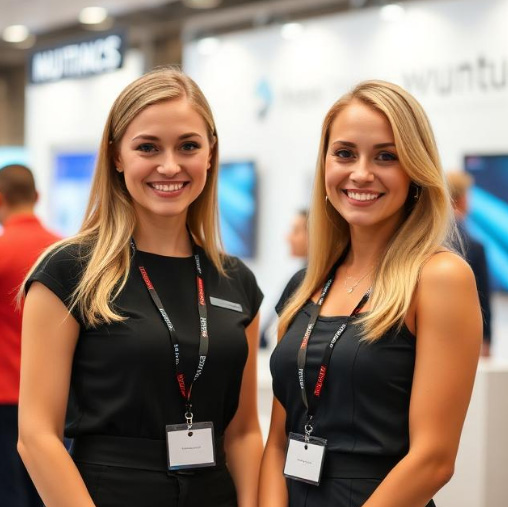
The “Aviation Hostess”: A Cultural and Logistical Bridge
The role extends far beyond translation. For international exhibitors—specifically from China, Turkey, and India—the Russian interpreter acts as a cultural mediator and logistics manager.
“The Chinese market is booming in drones, but the technical culture is different,” reflects a case study of a Chinese student who worked as a translator at “Drone Expo-2025” in Kazan. Her duties included “interpretation of trade negotiations, assistance in establishing contacts with potential Russian partners, and translation of presentations and product specifications”. She noted that her work was vital for “achieving mutual understanding” in a highly sensitive tech sector.
This sentiment is echoed by interpreters who prepare for the NAIS show. Because NAIS is supported by the Ministry of Transport and is the only Russian exhibition dedicated entirely to civil airport infrastructure (attracting over 10,000 visitors and 200+ manufacturers), the interpreter often pre-qualifies leads. They must determine whether a visitor is a curious student or a procurement officer from a federal airline looking to buy ground handling equipment worth millions.
“The hostess must know the difference between a Mi-8 and a Mi-26 before they even step on the floor,” notes industry guidelines. “If they can explain the technical specs of the rotor system, they are worth triple the rate”.
The High Stakes of Certification and Compliance
Perhaps the most terrifying word for a foreign exhibitor is Serteefikat (Certificate). Russia’s system of airworthiness certification, governed by the IAC (Interstate Aviation Committee) and Rosaviatsia, is dense and unforgiving.
A Russian aviation buyer’s first question is rarely about the price of a landing gear component. It is: Does this have an EAC or FATA approval for installation on a Russian aircraft?
“I once interpreted for a Chinese avionics manufacturer at NAIS,” a veteran of the industry recalls. “The Russian engineer asked for the specific GOST-R certification number for the GLONASS compatibility module. The Chinese manager started talking about their GPS certification. The deal nearly died in ten seconds. The interpreter had to step in, clarify the difference, and buy time for the legal team to produce the correct export bulletin.”
Preparing for Takeoff: Languages in Demand
While English-Russian remains the baseline, the geopolitical shift since 2022 has dramatically altered the linguistic landscape of Russian aviation.
- Chinese-Russian: With the surge in Chinese manufacturers of UAVs (drones) and commercial avionics, demand for Mandarin-speaking interpreters has exploded.
- Turkish-Russian: As a key partner in supply chain logistics, Turkish interpreters are highly sought after for helicopter and defense components.
- Arabic-Russian: With increased interest from the Middle East in Russian aviation technology, Arabic language skills are becoming a niche premium.
Interpreters must now also prepare for the “Import Substitution” reality. They must be ready to field questions not just about the product, but about the supply chain: “Where is the warehouse? Can you bypass Western logistics? Is the software open-source for Russian integration?”
The Human Element
At the end of the final day of the salon, when the fighters are towed back to their hangars and the exhibition lights dim, the interpreters pack up their headsets. They are often the last foreigners to leave the venue, having stayed to translate technical manuals, debrief sales teams, and draft follow-up proposals.
“We are not just voice boxes,” says a profile of a senior interpreter with 40 years of experience in the military and aviation field. “We are the structural engineers of the conversation. If we collapse, the deal collapses.”
In the high-altitude, high-stakes world of Moscow’s aircraft industry, the Russian exhibition interpreter is the unsung co-pilot of international commerce. They do not build the engines, but they ignite the trust that allows a Chinese drone to fly over Russian fields, a Turkish fuselage part to be installed in a Siberian hangar, and the global supply chain to keep turning—one perfectly translated word at a time.