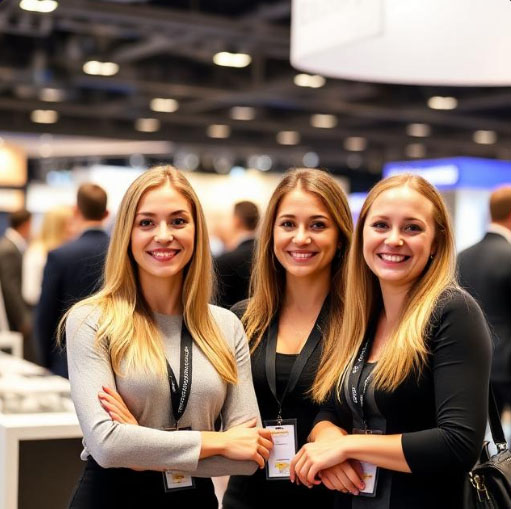
In the sprawling business landscape of Moscow, where East meets West and global commerce flows through exhibition halls and conference centers, one professional stands at the crossroads of every successful international transaction: the B2B event interpreter.
Moscow has emerged as a critical hub for international trade fairs, business summits, and industry-specific exhibitions. From the massive pavilions of Crocus Expo to the state-of-the-art Timiryazev Center, foreign delegations arrive daily seeking partnerships, contracts, and market access. But without the skilled professionals who bridge the linguistic divide, these ambitious meetings would dissolve into confused silence.
This is the world of the Russian B2B event interpreter—a world where precision meets pressure, and where one mistranslated word can cost millions.
The Two Pillars of Interpretation: Consecutive and Simultaneous
Professional interpreting in Moscow’s B2B event scene generally falls into two distinct categories, each serving a different purpose.
Consecutive Interpretation: The Art of the Negotiation
In the intimate setting of a trade fair booth or a closed-door negotiation, the consecutive interpreter takes center stage. Here, the speaker delivers a message—anywhere from two to ten minutes in length—and then pauses while the interpreter renders it into the target language.
This method is widely used at business meetings, negotiations, receptions, and exhibitions. While slower than simultaneous interpretation, consecutive interpretation allows for nuance, clarification, and the careful reading of verbal and non-verbal cues. It is the preferred mode for deal-making, where every gesture and hesitation matters as much as the words themselves.
Simultaneous Interpretation: The Engine of Large Events
For large conferences, summits, and international congresses, simultaneous interpretation is essential. The interpreter works in a soundproof booth, listening through headphones and speaking into a microphone, delivering continuous parallel translation in real time.
As a rule, if simultaneous interpretation lasts over one hour, two interpreters must work in rotation to maintain quality and prevent fatigue. This mode is indispensable when events have multiple language channels or when it is not feasible to pause for translation.
Beyond Words: The Technical Specialist
What distinguishes a B2B event interpreter from a general translator is specialization. In Moscow’s trade fair ecosystem, interpreters are often experts in specific industries.
Consider the professional background of Daria Konovalova, a Moscow-based interpreter working with the East Mining Company. Her portfolio includes consecutive translation for meetings on banking, taxation, legal issues, commerce, technical translation, and IT—specifically mining software. She handles three languages (Chinese, Russian, English) and translates everything from bilateral agreements to analytical reports on coal.
Or take Alexander Mescheryakov, a veteran with 30 years of experience. His expertise spans banking and finance, business management, law and legal matters, oil and gas engineering, petrochemistry, and patent translation. This depth of knowledge allows him to interpret confidently during technical construction project meetings and high-stakes commodity trading negotiations.
Agencies like MoscowInterpreters.Ru emphasize that their interpreters attend seminars and workshops regularly to stay current in their fields. For a client, this means the interpreter arrives not just fluent but informed.
The Cultural Gatekeeper
Language is only half the equation. The other half is culture.
Russian business culture has its own rhythms, hierarchies, and unspoken rules. A foreign executive might inadvertently commit a faux pas—addressing the wrong person, using an overly casual tone, or misreading the pace of negotiations. The skilled interpreter acts as a cultural gatekeeper, adjusting expressions to avoid misunderstandings and enhance trust.
As one agency notes, their interpreters have spent years as students or employees abroad. They know the culture and were a part of it. This background proves invaluable not only for translating technical content but also for navigating cross-cultural communication as a whole.
Where They Work: The Moscow Event Landscape
Moscow’s B2B interpreters are in demand across a wide range of venues and event types:
- Exhibitions and Trade Fairs: From massive industrial expos to niche sector shows, interpreters staff booths and facilitate walk-up conversations with international visitors.
- Conferences and Congresses: High-level events involving foreign delegations, government representatives, and international organizations require simultaneous interpretation.
- Business Negotiations: Closed-door meetings between Russian companies and foreign partners demand consecutive interpretation with absolute confidentiality.
- Legal and Government Sessions: Certified interpreters handle legal proceedings, compliance audits, and governmental meetings with strict accuracy and confidentiality.
- Medical and Healthcare Settings: Professional interpreters facilitate communication between foreign patients and Russian healthcare providers.
Organizations that have relied on Moscow-based interpreters include the IMF, World Bank, European Commission, UNESCO, UN agencies, and numerous foreign embassies.
The Value of Local Staff
For international companies exhibiting in Moscow, hiring local interpreters offers significant advantages over bringing their own staff.
Cost effectiveness is a primary factor. Using local staff minimizes travel expenses and frees up a company’s own sales team to focus on day-to-day operations. Local interpreters are native Russian speakers who are also fluent in English and other languages. They know the city, the venue logistics, and the local business environment.
Agencies like Moscow Interpreters and Moscow Hostess ensure that every interpreter is thoroughly briefed and hand-matched to each client’s specific needs. Many international businesses rebook the same interpreters for multiple events, building relationships that enhance continuity and trust.
The Human Element: Why AI Cannot Replace Them
In an age of AI translation apps, the question inevitably arises: can technology replace the human interpreter?
The short answer is no.
AI cannot navigate the noise of a crowded exhibition hall. It cannot read sarcasm, hesitation, or the subtle shift in tone that signals a change in negotiating position. It struggles with industry-specific terminology and real-time adaptation to unexpected topics.
Most critically, AI cannot guarantee confidentiality. When contracts are being signed and intellectual property discussed, businesses trust a human professional bound by ethics and non-disclosure agreements—not a cloud-based algorithm with unknown data practices.
Practical Advice for Booking an Interpreter
For companies planning to exhibit or attend B2B events in Moscow, experienced professionals offer clear guidance:
Book well in advance. Professional interpreters are in high demand, and top talent is often reserved months ahead of major events.
Request CVs and interviews. Reputable agencies allow clients to review interpreters’ qualifications and speak with them by phone before booking.
Provide background materials. Sharing information about the event, the participants, and the technical subject matter allows interpreters to prepare effectively. The more context they have, the better they perform.
Consider a pre-event meeting. Meeting the interpreter beforehand to discuss the upcoming event in detail is highly beneficial.
The Silent Partners in Every Deal
The steel and glass of Moscow’s exhibition centers provide the stage, but the interpreter provides the voice.
In the high-stakes world of B2B events—where handshakes seal million-dollar deals and a single misunderstanding can unravel months of negotiation—the Russian interpreter stands as the essential bridge. They are technical experts, cultural diplomats, and logistical problem-solvers all in one.
As Moscow continues to cement its position as a global hub for international trade, the demand for these skilled professionals will only grow. For any business looking to succeed in the Russian market, the message is clear: bring your products, bring your strategy, but do not forget to bring someone who can speak the language—in every sense of the word.
If you are planning a B2B event in Moscow, secure your interpreter early. Your future business partner is waiting—but they are waiting in Russian.