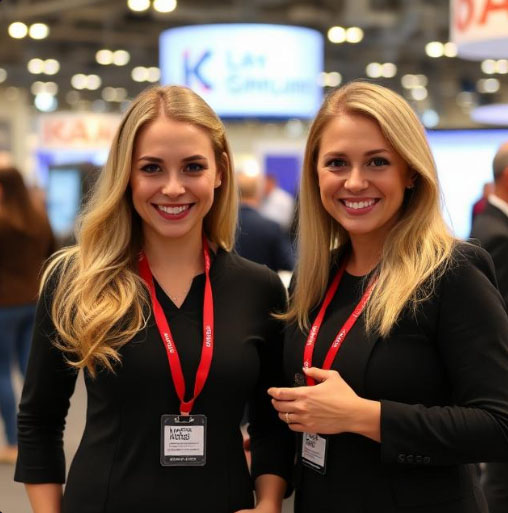
Kazan, the capital of the Republic of Tatarstan, is a city where East meets West, where centuries of Tatar heritage intertwine with Russian identity, and where the modern global economy meets ancient traditions. In this uniquely bilingual and multicultural environment, interpreters serve as essential bridges—not merely translating words, but facilitating understanding across linguistic, cultural, and professional divides.
A Bilingual City with Global Ambitions
Kazan stands apart from most Russian cities. With over 1.2 million residents, it is a place where Russian and Tatar are both widely spoken, where the Kazan Kremlin—a UNESCO World Heritage Site—symbolizes centuries of coexistence, and where the city’s identity is deeply rooted in its dual linguistic heritage. For visitors, international businesses, and organizations, navigating this landscape requires more than basic language skills—it demands cultural mediation.
This is where interpreters step in. They work across business negotiations, international conferences, government proceedings, medical consultations, and cultural festivals, ensuring that communication flows seamlessly between Russian, Tatar, and a growing array of foreign languages.
The Diverse Landscape of Interpreting in Kazan
Industrial and Technical Expertise
Kazan‘s economy is driven by key sectors that generate significant demand for specialized interpreters. The city is home to major industrial enterprises, including the KAMAZ automotive plant and petrochemical refineries, alongside a thriving IT sector. Technical interpreters in Kazan handle complex documentation such as user manuals, engineering specifications, safety protocols, and software documentation, ensuring compliance with both domestic (GOST, Rosstandard) and international (ISO, ASTM) standards.
Automotive manufacturing, oil and gas, and information technology are particularly prominent sectors requiring specialized linguistic support. Interpreters working in these fields must possess not only language fluency but also deep subject-matter expertise to accurately convey technical terminology and procedural details.
Legal and Certified Translation
For official and legal purposes, Kazan relies on court-sworn translators registered with the Tatarstan regional court. These accredited professionals authenticate civil-status records—birth, marriage, and death certificates—as well as passports, academic diplomas, powers of attorney, and legal contracts. Their official seals and signatures are required for documents submitted to migration authorities, embassies, universities, and courts.
The city’s substantial student and expatriate communities drive constant demand for certified translations. International students at Kazan Federal University, Kazan National Research Technical University, and other institutions require officially translated academic transcripts and diplomas for admission—a process where even minor inconsistencies can lead to delays or denial.
Medical and Scientific Interpretation
Kazan‘s healthcare and life sciences sectors require precise medical translation for patient records, clinical-trial protocols, pharmaceutical dossiers, and medical device instructions. Hospitals serving both local residents and medical tourists depend on interpreters who adhere to Ministry of Health guidelines, where accuracy is literally a matter of safety.
Scientific research institutes in Kazan produce papers, patents, and grant proposals that necessitate scholarly translation aligned with international publication standards. Interpreters with medical or scientific backgrounds collaborate with healthcare professionals and researchers to ensure that technical terms—drug names, procedural steps, experimental data—are rendered with clinical precision.
Cultural and Event Interpretation
Kazan‘s vibrant cultural calendar generates significant demand for multimedia localization and live interpretation. Major events include the Kazan International Muslim Film Festival, Sabantuy celebrations, and numerous academic conferences held at venues like the Kazan Expo International Exhibition Center. Interpreters work in consecutive, simultaneous, and whispered modes, facilitating multilingual communication at exhibitions, festivals, and cultural programs.
Multimedia localization services—subtitling, voice-over, and transcreation—help adapt audiovisual content for local and international audiences, ensuring that Kazan‘s cultural offerings resonate across linguistic boundaries.
The Interpreters Themselves: Profiles and Practice
A typical interpreter in Kazan navigates a remarkably varied professional landscape. One day might involve simultaneous interpretation at a tech conference, translating speeches by Russian and Tatar entrepreneurs into English for an international audience. The next could be a guided tour of the Kazan Kremlin, explaining centuries of history to foreign visitors.
The city’s bilingual environment adds a distinctive layer of complexity. Interpreters often switch between Russian and Tatar within the same conversation, requiring fluency in both state languages alongside their working foreign languages. English, German, Spanish, and Chinese are among the most frequently requested foreign languages, reflecting Kazan‘s growing international connections.
Professional interpreters in Kazan serve as cultural ambassadors, not merely linguistic conduits. They navigate cultural subtleties, build rapport with clients, and adapt to unexpected situations—skills that remain irreplaceable even as technology advances.
The Economics of Interpretation in Kazan
The interpreting profession in Kazan offers a viable career path with clear progression based on experience and education. Average annual salaries for interpreters in the city are approximately 1,147,500 RUB, with entry-level positions starting around 573,500 RUB and experienced specialists earning up to 1,777,700 RUB annually.
Experience significantly impacts earning potential:
- 0-2 years: ~689,900 RUB
- 2-5 years: ~909,300 RUB
- 5-10 years: ~1,224,800 RUB
- 10-15 years: ~1,450,700 RUB
- 15-20 years: ~1,570,900 RUB
- 20+ years: ~1,678,300 RUB
Education also plays a crucial role. Interpreters with a bachelor’s degree earn approximately 37% more than those with only a certificate or diploma, while those holding a master’s degree earn an additional 29% premium.
Professional Networks and Community
Kazan‘s interpreting community is connected through active professional networks. Telegram serves as a primary platform where interpreters share news, job openings, and event information through city-specific and language-specific chats. These communities help freelancers find opportunities, share resources, and maintain professional connections in a field where networking is essential.
Regulatory Landscape and Data Security
Translations intended for official use in Kazan must meet strict certification standards. Court-sworn translators authenticate documents with embossed seals and handwritten signatures, confirming fidelity to source texts. Documents destined for international use often require apostille certification under the Hague Convention or consular legalization.
Data security is paramount, particularly given Russia’s Personal Data Protection Law (Federal Law No. 152-FZ) . Professional translation providers implement encrypted file transfers, secure server storage, and role-based access controls to safeguard sensitive personal, corporate, and medical data.
The Future of Interpreting in Kazan
As Kazan continues to grow as a hub for culture, education, and commerce, demand for skilled interpreters is poised to increase. The city’s universities—particularly Kazan Federal University—are producing a new generation of linguists and translators equipped to meet this demand. Simultaneously, digital government initiatives like the Gosuslugi portal are streamlining submission of certified translations through secure electronic uploads with QR-code verification.
Technological advancements, including AI-powered translation tools, are complementing rather than replacing human interpreters. While machines can handle routine tasks, the human ability to understand cultural context, navigate sensitive situations, and build trust remains irreplaceable.
The interpreter in Kazan is far more than a language professional. In a city defined by its dual heritage and global aspirations, interpreters are cultural mediators, facilitators of dialogue, and essential links in the chain of international cooperation. Whether at a high-stakes business negotiation, a medical consultation, a legal proceeding, or a cultural festival, they ensure that communication transcends linguistic boundaries.
As Kazan continues to embrace its role as a bridge between Europe and Asia, between tradition and modernity, the interpreters who call this city home will remain at the heart of its global connections—translating not just words, but understanding itself.
