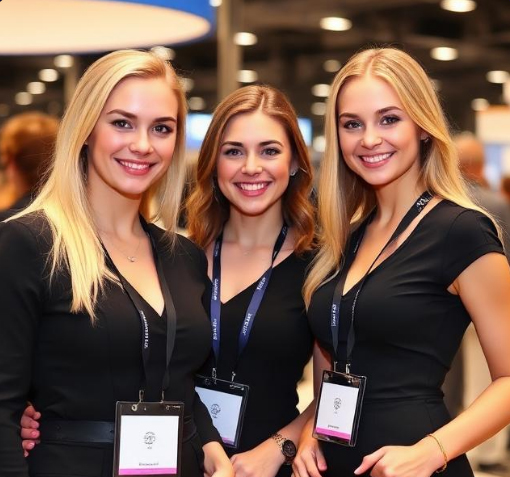
Moscow has emerged as a major hub for the plastics, rubber, and composites industries, hosting several key international exhibitions such as Interplastica, RuPlastica, and Rosplast. These events, held at venues like the Crocus Expo and Timiryazev Centre, attract equipment manufacturers, raw material suppliers, and recycling technology providers from Germany, China, Italy, Turkey, and across the globe.
For international companies looking to break into the Russian market or expand their presence in the CIS region, the language barrier presents a formidable challenge. In an industry where a single misunderstood specification about melt flow index or screw diameter can lead to significant commercial losses, the role of a specialized Moscow-based interpreter has evolved from a mere linguistic conduit to a strategic commercial asset.
Beyond General Translation: Industry Specialization
The plastics industry operates on a dense lexicon of chemistry and engineering. A general interpreter might know the word for “plastic” (пластик), but a specialized plastics interpreter understands the nuanced difference between “extrusion” (экструзия), “injection molding” (литье под давлением), and “blow molding” (выдувное формование).
These professionals possess deep knowledge of:
- Polymers and Additives: Understanding the properties of polyethylene (PE), polypropylene (PP), PVC, PET, and advanced composites.
- Processing Technologies: Familiarity with extruders, injection molding machines, blow molders, and thermoforming equipment.
- Recycling Terminology: Expertise in terms like “agglomerator” (агломератор), “regrind” (дробленка), and “chemical recycling” (химическая переработка).
Key Events Requiring Specialist Interpreters
Interplastica Moscow
Organized by Messe Düsseldorf, Interplastica is Russia’s leading trade fair for plastics and rubber. It runs concurrently with Upakovka (the packaging trade fair), creating a massive convergence of the entire polymer processing value chain. Here, interpreters facilitate technical negotiations covering everything from primary processing equipment to packaging line integration.
RuPlastica
This event focuses on the full technological chain, from basic equipment to peripherals, tooling, and alternative raw materials. It is a critical venue for suppliers of molds, dies, and automation solutions.
Rosplast
An international exhibition covering raw materials, equipment, production automation, and recycling. The recycling segment, in particular, has grown in importance as Russia develops its circular economy and extended producer responsibility (EPR) frameworks.
The Interpreter’s Role in the Value Chain
A specialized interpreter contributes at multiple stages of the business development cycle:
1. Technical Booth Discussions
On the exhibition floor, Russian engineers and plant managers will ask precise technical questions. A specialist interpreter can articulate throughput rates, clamping forces, energy efficiency metrics, and compatibility with existing Russian-manufactured auxiliary equipment. This technical fluency builds immediate credibility.
2. Contract Negotiations
When discussions move to pricing, delivery terms, and service agreements, precision becomes non-negotiable. Interpreters must accurately convey warranty conditions, payment schedules, and penalty clauses without ambiguity.
3. Factory Site Visits
Many deals advance to visits to Russian plastics processing plants. An interpreter who understands production floor layouts, safety protocols, and operational terminology is essential for translating on-site demonstrations and troubleshooting discussions.
4. Regulatory and Certification Discussions
The Russian market has specific certification requirements (EAC certification) for plastics machinery and materials. Interpreters help navigate discussions about compliance with Customs Union technical regulations.
Profile of a Moscow Plastics Industry Interpreter
Experienced interpreters in this niche often have backgrounds in engineering, materials science, or chemistry. Many have worked extensively at industry events. For instance, professional interpreters with portfolios including Interplastika, Rosplast, and Composite Expo are available in Moscow, with daily rates typically ranging from €150 to €200.
Leading Moscow-based agencies offer comprehensive support:
- MoscowInterpreters.Ru has extensive experience in technical translations for oil and gas and petrochemicals, with over 100 full-time translators and editors, demonstrating the high-volume capability available in the market.
Strategic Selection: How to Choose Your Interpreter
To maximize return on investment when hiring a plastics industry interpreter in Moscow, consider the following criteria:
| Selection Criteria | What to Look For |
|---|---|
| Industry Background | Engineering, chemistry, or materials science education; proven plastics industry experience |
| Terminology Mastery | Knowledge of extrusion, injection molding, blow molding, and recycling terminology |
| Event Experience | Prior work at Interplastica, Rosplast, RuPlastica, or similar technical fairs |
| Preparation Process | Willingness to review technical manuals, glossaries, and product specifications in advance |
| Certifications | Court interpreter certification (for legal contracts) or technical translation credentials |
The High Cost of Miscommunication
In the plastics industry, where tolerances are measured in millimeters and temperatures in precise degrees Celsius, a translation error can be catastrophic. A misunderstood specification about material hygroscopy could lead to defective finished products. An incorrectly translated pressure rating could create safety hazards. These risks make the investment in a qualified, specialized interpreter a form of risk management, not merely an operational expense.
Moscow’s plastics industry is a sophisticated market with significant opportunities for international suppliers of machinery, materials, and technology. However, success requires more than just a superior product—it demands precise, technically accurate communication. By engaging a specialized plastics industry interpreter from the local Moscow market, companies can bridge the linguistic gap, demonstrate technical competence, and build the trust necessary to secure long-term commercial partnerships in Russia’s dynamic manufacturing sector.