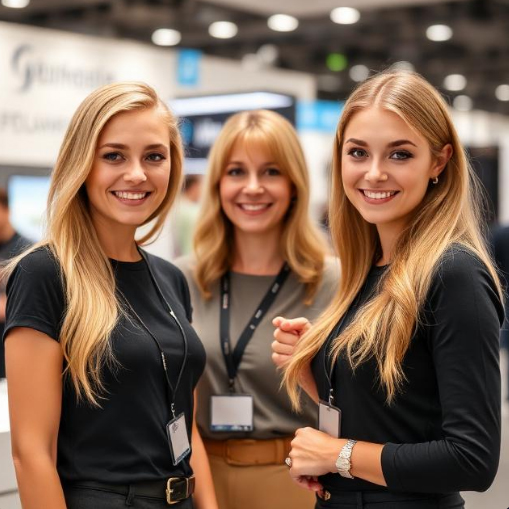
Moscow’s Crocus Expo International Exhibition Center is one of the largest and most dynamic venue complexes in Eastern Europe. Spanning over 1.4 million square meters, it hosts hundreds of international trade fairs each year, attracting exhibitors and buyers from across the globe. From heavy machinery and automotive parts to textiles, petrochemicals, and IT solutions, Crocus Expo serves as a vital gateway for businesses looking to enter the Russian market and expand internationally.
However, amid the gleaming product displays, the flurry of handshakes, and the stacks of brochures, one group of professionals works tirelessly behind the scenes, often unnoticed but absolutely indispensable: the Russian-English interpreters.
More Than Words: The Cultural Bridge
Interpreting at a trade fair like Crocus Expo is not merely about converting Russian grammar into English syntax or vice versa. It is a high-stakes exercise in cultural mediation. Russian and Western business cultures often operate on different wavelengths. A Russian negotiator might value a long, relationship-building conversation before discussing price, while an English-speaking counterpart may prefer to get straight to the point. A skilled interpreter navigates these unspoken expectations, ensuring that neither party feels rushed, dismissed, or misunderstood.
For example, the Russian phrase “ну, посмотрим” (nu, posmotrim), which literally means “well, we’ll see,” is often a polite way of saying “no” or “I’m not interested.” A novice interpreter might transmit this literally, leaving an English-speaking client confused and hopeful. An experienced interpreter, however, will read the tone, body language, and context, subtly alerting the client to the real meaning behind the words. This kind of insight can save hours of wasted follow-up and thousands of dollars in misguided effort.
The High-Pressure Environment of a Trade Fair
Life on the Crocus Expo floor is not for the faint-hearted. Trade fairs are chaotic, loud, and exhausting. Interpreters must be prepared for:
- Marathon days: A typical fair lasts 2-4 days, with interpreters working 8-10 hours non-stop. This includes consecutive interpreting during face-to-face meetings, whispered simultaneous interpretation during group tours, and sometimes even sight translation of brochures, contracts, or price lists handed to them on the spot.
- Physical and mental stamina: Standing for hours on concrete floors, navigating crowded aisles, and maintaining perfect concentration while background noise blares from nearby booths is a grueling test of endurance. Cognitive fatigue is a real danger; a single mistranslated number or technical term could derail a negotiation.
- On-the-spot terminology: Trade fairs bring together highly specialized industries. An interpreter who was discussing agricultural harvesting equipment in the morning might be translating a discussion about pharmaceutical cleanrooms in the afternoon. This requires not just linguistic ability but the intellectual agility to rapidly absorb and accurately reproduce industry-specific jargon without preparation.
Key Sectors at Crocus Expo Demanding Expert Interpreters
Certain industries, due to their technical complexity and high stakes, have an especially high demand for professional Russian-English interpreters at Crocus Expo:
- Heavy Industry & Machinery: Exhibitions like CTT Expo (construction equipment) and MiningWorld Russia require interpreters who understand hydraulic systems, load capacities, engine torque, and safety certifications.
- Oil & Gas: The MIOGE (Moscow International Oil & Gas Exhibition) is a major event. Interpreters here must be comfortable with terms like “upstream exploration,” “drilling fluid,” “refinery throughput,” and “LNG liquefaction.”
- IT & Digital Solutions: For events like Crocus Expo’s own tech forums, interpreters need to master cloud computing, cybersecurity protocols, AI algorithms, and SaaS business models.
- Logistics & Supply Chain: With Russia’s growing focus on Eurasian trade routes, interpreters at logistics fairs must handle customs declarations, freight forwarding terms (Incoterms), warehousing regulations, and cross-border e-commerce platforms.
- Medical & Pharmaceuticals: Exhibitions like Zdravookhraneniye require extreme precision. Mistranslating a dosage or a medical device specification is not a commercial error – it is a dangerous one.
A Strategic Asset, Not a Luxury
In the past, many international companies viewed interpreters as a simple expense – a warm body to fill a language gap. That perspective has changed. Today, successful exhibitors at Crocus Expo treat professional interpreters as strategic partners.
Before the fair opens, top-tier interpreters often request briefing materials: product catalogs, company backgrounders, and even a list of likely objections from Russian buyers. During negotiations, they will tactfully signal when cultural friction is occurring. After a meeting, they may offer a quick debrief, alerting the client to a subtle shift in tone or an unspoken concern from the Russian side. In essence, a great interpreter becomes an extension of the client’s own team – a trusted advisor in real-time.
The Future: Technology vs. Human Touch
With the rise of AI translation tools and real-time apps like Google Translate, some might wonder if human interpreters will soon be obsolete. At Crocus Expo, the answer is a resounding “no.” Machine translation fails in noisy environments, struggles with industry-specific terminology, and is completely blind to cultural nuance. A negotiation involving millions of dollars, legal liabilities, and long-term partnerships cannot be entrusted to a smartphone app.
What machines cannot replace is human judgment: the ability to ask for clarification, to sense rising tension, to smooth a cultural misunderstanding with a careful rephrasing, or to know when silence is more powerful than words.
Conclusion: Architects of Trust
As you walk through the grand pavilions of Crocus Expo, past gleaming machinery and busy exhibition stands, take a moment to notice the quiet professionals sitting beside the decision-makers. They are the ones leaning in to listen, nodding, and then speaking – not with their own voice, but with the shared voice of two parties who want to trust each other.
Russian-English interpreters at Crocus Expo do more than translate. They build bridges. They manage expectations. They turn a cacophony of unfamiliar sounds into clear communication. And in the high-stakes world of international trade, clear communication is the ultimate currency.
This article is dedicated to all the dedicated interpreters who make business happen at Crocus Expo – one perfectly translated sentence at a time.