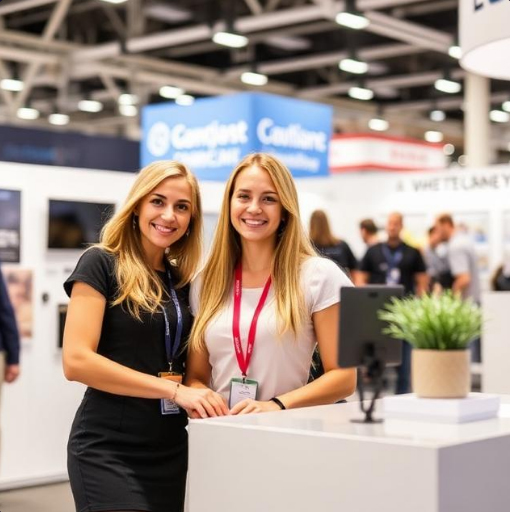
Moscow’s premier leather goods exhibitions—Obuv. Mir Kozhi, LeShow, and Euro Shoes—are far more than showcases for luxury footwear, bags, and outerwear. They are high-stakes commercial ecosystems where international manufacturers, wholesale buyers, and retail giants converge to forge partnerships worth millions of rubles.
LeShow alone attracts specialists from at least 35 countries, while Obuv. Mir Kozhi hosts prestigious brands like Giovanni Fabiani, Loriblu, and Valentino Orlandi. In this environment—where success hinges on the quality of a hide, the precision of a stitch, and the strength of a handshake—a language barrier is not a minor inconvenience; it is a potential deal-breaker.
Enter the specialized trade fair interpreter: a professional who transcends simple translation to become a strategic partner in commerce.
Speaking the Language of the Trade
The leather industry possesses a lexicon that is remarkably specific and technical. A mistranslation regarding a grade of hide, a tanning process, or a quality control standard can lead to costly errors and damaged reputations. This is where the specialized interpreter proves their worth.
These professionals are fluent in:
- Technical and Material Terminology: They navigate the critical distinctions between «кожа» (leather) and «замша» (suede), accurately explain «дубление» (tanning) methods—whether vegetable-tanned («растительное дубление») or chrome-tanned («минеральное дубление»)—and understand grades of hide, grain types, and finishes like aniline («анилиновая отделка»).
- Manufacturing and Quality Control Jargon: They precisely convey details about «прошивка» (stitching), «тиснение» (embossing), «толщина» (thickness), and defects («дефекты»), which is essential when discussing production capabilities and standards.
- Business and Supply Chain Vocabulary: They facilitate discussions on «логистика» (logistics), «оптовые цены» (wholesale prices), and «условия оплаты» (payment terms). Precision here is non-negotiable for closing contracts.
The Interpreter as a Strategic Partner
The value of a skilled interpreter manifests across every interaction at the fair:
Booth Ambassador and Technical Expert
Working alongside sales and technical teams, a specialized interpreter engages with tanners, fashion house representatives, and artisans. They do not merely translate; they provide knowledgeable explanations of a product’s unique selling points—whether it’s the sustainability of a tanning process, the durability of upholstery leather, or the innovation behind a new finishing technique. This builds immediate credibility and trust with discerning buyers.
Negotiation Facilitator
During B2B meetings with potential distributors or large-scale buyers, the interpreter becomes a strategic partner. They ensure that every detail—from technical specifications and order volumes to delivery schedules—is understood with absolute clarity by both parties. This prevents misunderstandings that could jeopardize significant deals.
Technical Demonstration Specialist
For suppliers of machinery or chemical products, the interpreter is crucial during technical demonstrations. Explaining the operation, maintenance, and benefits of complex equipment requires exact, unambiguous communication that only a specialist can provide.
Selecting the Right Specialist
Exhibitors who leverage interpreters effectively look for:
- Proven Industry Knowledge: Experience in manufacturing, textiles, fashion, or chemistry, and comfort with the industry’s specific terminology.
- Meticulous Preparation: True professionals request technical data sheets, product catalogs, and key terms in advance to ensure mastery of a company’s specific niche.
- Professional Demeanor: The interpreter must represent a brand with authority and reliability, inspiring confidence in potential partners.
In the tangible world of leather and luxury, where trust is built on precision and quality, the investment in a specialized interpreter is not an expense—it is a strategic necessity. They are the essential link that ensures a brand’s quality is understood, its expertise is respected, and its business proposals are received with clarity and confidence. In Moscow’s competitive leather goods trade fairs, where orders are placed and reputations are forged, a skilled interpreter ensures nothing gets lost in translation.
