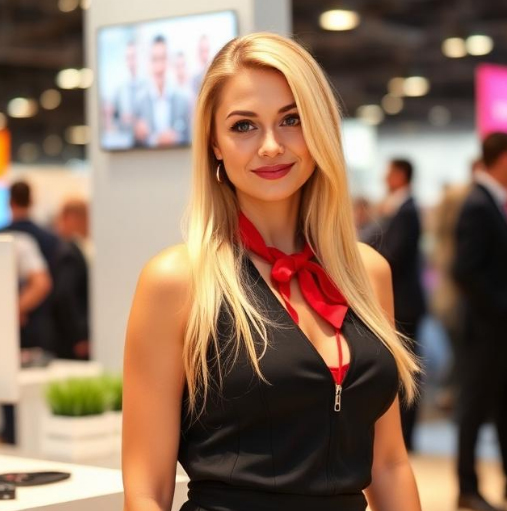
In the cavernous exhibition halls of Moscow’s Crocus Expo, where massive excavators, drilling rigs, and dump trucks loom over visitors, a different kind of heavy lifting takes place. At events like MiningWorld Russia—the country’s leading international exhibition for mining machinery, equipment, and technologies—the booth interpreter has evolved far beyond a casual translator into a strategic business partner critical to international success.
With the exhibition celebrating its 30th anniversary in 2026 and hosting over 500 participating companies from more than 16 countries, including China, Turkey, India, and South Africa, the demand for specialized interpretation has never been higher. The stakes are immense: Russian mining operations extract resources worth trillions of dollars across extreme environments, and a misunderstood technical specification can cost millions in mis-specified equipment.
A Profession Defined by Technical Mastery
The mining and mineral processing sector ranks among the most terminology-dense engineering fields. A qualified booth interpreter at a Moscow mining exhibition must command specialized vocabulary spanning multiple domains:
Exploration: geological surveys, core sampling, reserve estimation, geophysical mapping
Extraction: open-pit mining, underground development, longwall mining, block caving
Material Handling: conveyor systems, haul trucks, bucket-wheel excavators, skip hoists
Mineral Processing: crushing, grinding, screening, flotation, magnetic separation, dewatering
Safety Systems: roof support, gas monitoring, refuge chambers, explosion suppression
Automation: fleet management systems, remote operation centres, predictive maintenance
An interpreter who confuses “crusher throughput” with “screen efficiency” can fundamentally misrepresent equipment capabilities. This is why educational background in mining, mechanical, or process engineering is highly valued when selecting exhibition interpreters.
Navigating Russian Certification Standards
For international mining equipment exhibitors, the first question from Russian buyers is rarely price—it is certification. Equipment entering the Russian market must comply with:
- EAC Certification (Eurasian Conformity) for machinery safety
- TR CU 010/2011 (Machinery and Equipment Safety)
- TR CU 032/2013 (Equipment Operating in Explosive Environments—critical for coal mining)
- GOST standards for specific equipment categories
A skilled booth interpreter understands these frameworks and can identify which certifications apply to which equipment types. For Chinese exhibitors—who represented a significant presence at MiningWorld Russia 2026, including companies such as Anhui Auster and Yantai Jinpeng—interpreters familiar with the gap between Chinese GB standards and Russian GOST/EAC requirements are particularly valuable.
Facilitating Heavy Equipment Demonstrations
One of the most spectacular features of MiningWorld Russia is the “Territory of Heavy Machinery” —a special exposition where exhibitors demonstrate full-sized operational equipment. In 2025, this section featured more than 40 companies displaying over 50 units of machinery, including drilling rigs, excavators, and dump trucks.
In this environment, interpreters must function under challenging conditions:
- High noise levels from operating equipment require clear, direct communication
- Safety protocols must be communicated precisely before visitors approach machinery
- Technical specifications—engine power, bucket capacity, operating weight—need accurate translation on the spot
- Operational demonstrations require interpreters to shadow technical staff and explain each step
The interpreter in these settings serves as the voice of the demonstration—ensuring safety and comprehension simultaneously.
Engaging a Sophisticated Technical Audience
The visitor profile at MiningWorld Russia is highly professional. In 2026, the exhibition expects over 10,000 professional visitors, including specialists and managers from mining enterprises, processing plants, and wholesale trading companies. Major mining companies regularly represented include ALROSA, Norilsk Nickel, Metalloinvest, Nordgold, Severstal, RUSAL, and Uralkali.
Booth interpreters must quickly assess each visitor’s role and adapt their communication style accordingly:
| Visitor Type | Technical Focus |
|---|---|
| Mine engineers | Equipment integration, operational efficiency, maintenance requirements |
| Procurement managers | Total cost of ownership, delivery timelines, spare parts availability |
| Processing plant managers | Throughput rates, product quality, energy consumption |
| Safety officers | Compliance documentation, emergency systems, operator training |
| Executive leadership | Strategic partnerships, long-term service agreements |
Understanding Russia’s Unique Operating Environment
Russia’s mining industry operates under extreme conditions that foreign manufacturers must address. An informed interpreter can position products effectively by understanding:
- Arctic and Sub-Arctic Operations: Mines in Yakutia, Norilsk, and Chukotka operate at temperatures below -50°C. Equipment requires cold-weather packages, specialized lubricants, and heated cabins.
- Remote Logistics: Many Russian mining operations are accessible only by winter roads or air. Spare parts availability and on-site service capabilities are critical buying factors.
- Deep Underground Conditions: Some Russian metal mines operate at depths exceeding 1,500 metres, requiring specialized ground support and ventilation.
- Permafrost Challenges: Construction and mining in permafrost zones require specific engineering approaches.
Interpreters who understand these conditions help international exhibitors address visitor concerns proactively rather than defensively.
Supporting B2B Negotiations and Lead Qualification
At an exhibition with over 10,000 professional visitors, not every conversation represents a sales opportunity. Professional booth interpreters develop the ability to qualify visitors by asking targeted questions:
- “What type of deposit do you operate—coal, ferrous metals, precious metals, or industrial minerals?”
- “What is your current crushing/grinding/flotation capacity?”
- “Are you considering an equipment upgrade or a new plant construction?”
- “What is your timeline for purchasing decisions?”
By filtering serious buyers from information-seekers, interpreters ensure that technical sales staff focus on high-value prospects. Many professional interpreters in Moscow also handle lead capture—scanning badges, recording discussion notes, and organising follow-up information.
Cultural and Business Mediation
Russian and international business cultures differ significantly in industrial negotiations. Russian procurement specialists are known for being direct, detail-obsessed, and highly sceptical of claims without documentation.
A skilled booth interpreter bridges these gaps by:
- Conveying technical confidence—Russian engineers respect precise, data-backed communication
- Anticipating documentation needs—having technical data sheets and certificates available before questions arise
- Understanding negotiation pacing—knowing when to push for commitment and when to allow silence for evaluation
- Navigating formal address conventions—using appropriate titles and honourifics
At exhibitions where deals may be initiated in the morning and signed by afternoon, cultural fluency accelerates the sales cycle.
Language Pairs and Market Dynamics
Based on MiningWorld Russia 2026 participation data, the interpreter demand profile includes:
| Language Pair | Primary Use Case |
|---|---|
| English–Russian | Western equipment manufacturers (US, UK, Europe) |
| Chinese–Russian | Chinese equipment and technology suppliers |
| Turkish–Russian | Turkish mining equipment suppliers |
| Korean–Russian | South Korean technology providers |
Chinese exhibitors represented a significant contingent at MiningWorld Russia 2026. For these exhibitors, Chinese–Russian booth interpreters are in particularly high demand. The Russian market for Chinese mining equipment has expanded substantially, driven by both pricing advantages and the modernisation of Russian processing infrastructure. The exhibition also featured companies from Belarus, Kazakhstan, Kyrgyzstan, and Mongolia, creating additional CIS-focused language requirements.
Selecting the Right Mining Booth Interpreter
When hiring booth interpreters for Moscow mining exhibitions, technical competence outweighs general language fluency.
Selection Criteria (Priority Order)
| Priority | Attribute |
|---|---|
| Essential | Fluency in Russian and the exhibitor’s language |
| High | Educational background in mining, mechanical, or process engineering |
| High | Previous experience at MiningWorld Russia or similar industrial exhibitions |
| Essential | Familiarity with mining industry terminology |
| Valuable | Knowledge of Russian certification requirements (EAC, GOST, TR CU) |
| Essential | Professional appearance and demeanour |
Testing Terminology Competence
Before hiring, exhibitors should test candidates with industry-specific terms. Example test terms include:
- “Jaw crusher closed side setting” vs. “jaw crusher eccentric throw”
- “Froth flotation collector” vs. “froth flotation frother”
- “Conveyor belt splice” vs. “conveyor belt idler”
- “Dragline bucket capacity” vs. “dragline cycle time”
An interpreter who understands these distinctions can engage technical visitors meaningfully; one who does not will struggle.
Sourcing Channels
Professional booth interpreters for Moscow mining exhibitions can be sourced through:
- Specialised agencies offering industry-specific vetting and backup staff guarantees
- Independent professionals with verified exhibition experience and technical backgrounds
- University referrals from Moscow’s technical universities (Moscow Mining Institute, Bauman MSTU)
In the high-stakes environment of Moscow’s mining machinery exhibitions, the technical interpreter is far more than a language facilitator. They are a strategic asset who can articulate complex engineering concepts, navigate Russian certification requirements, manage heavy equipment demonstrations, qualify serious buyers, and bridge cultural divides in commercial negotiations.
As the Russian mining sector continues its modernisation push and international participation at MiningWorld Russia grows, the demand for these specialised professionals will only intensify. For any company investing heavily to showcase its mining equipment in Moscow, selecting a truly qualified technical interpreter is not an expense—it is a strategic investment in market penetration and sales success.