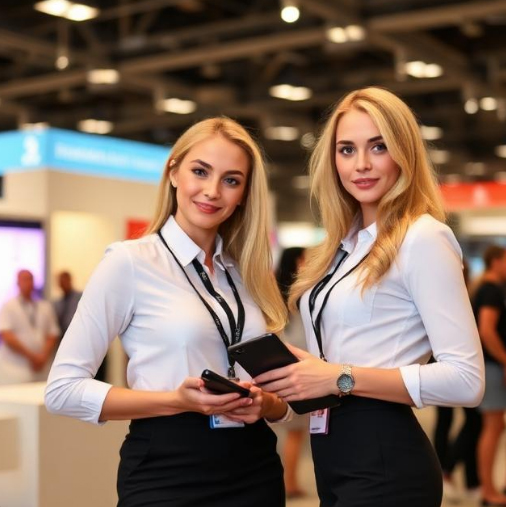
In the sprawling pavilions of Moscow’s Crocus Expo and Timiryazev Centre, a different kind of performance unfolds each season. It is not a ballet, but the ballet of business—the high-stakes world of catering and hospitality trade shows. As Russian restaurateurs seek the latest kitchen technologies and international suppliers eye the vast Russian market, one professional stands at the intersection of commerce and communication: the catering industry exhibition interpreter.
These are not merely linguists. They are the vital link that allows a pasta maker from Italy to explain extrusion techniques to a Moscow pizzeria owner, or a German baking oven manufacturer to discuss energy efficiency with a Russian pastry chef. In an industry where a misunderstood temperature setting can ruin a batch of bread, precision is not a luxury—it is the main course.
The Moscow Catering Stage: Key Events
Moscow hosts a robust calendar of hospitality and catering events, each with unique demands for interpreting services. Understanding the landscape is the first step for any international exhibitor.
PIR Expo: The Industry’s Crown Jewel
Without question, PIR Expo is the largest professional event for the HoReCa (Hotel, Restaurant, Café) industry in Russia. The 2026 edition, marking its 28th year, will take place from October 26-29 at Crocus Expo. The scale is staggering: in 2025, the exhibition welcomed 48,563 visitors and featured 800 companies, including both Russian and international participants. Beyond the exhibition floor, PIR Expo offers an extensive business program with 317 events, including analytical sessions, lectures, and practical seminars led by 712 industry experts.
For interpreters, this means navigating not only booth conversations but also panel discussions, live cooking demonstrations, and masterclasses where chefs share their expertise in real-time.
HoReCa Expo & Coffee Tea Cacao Russian Expo
Held each April at the Timiryazev Centre, HoReCa Expo is a dedicated exhibition for the hospitality industry. In 2026, it ran from April 15-17 alongside the Coffee Tea Cacao Russian Expo. This combined event attracted over 25,000 professionals and 400 exhibitors from Russia and other countries. The program included more than 200 activities over three days—lectures, presentations, masterclasses, tastings, and professional competitions. A highlight was the Chef a la Russe culinary team championship, an open competition for chefs conducted in partnership with METRO and the National Association of Culinary Artists of Russia.
WorldFood Moscow
WorldFood Moscow is an international autumn food exhibition serving as a professional platform where food manufacturers and related service providers meet buyers from retail, wholesale, and catering sectors. With participants from dozens of countries, this event requires interpreters who can handle not just Russian and English but also other European and Asian language pairs.
Supporting Events
The catering industry ecosystem includes several specialized exhibitions. PRODEXPO, held at Expo Centre, is Russia’s number one exhibition for food, beverages, and raw materials. Modern Bakery Moscow and GOTOVO (focused on ready-to-eat food production) gather equipment manufacturers, ingredient suppliers, and retail buyers. DairyTech has shown significant growth, with attendance increasing 26% in a single year.
Beyond Translation: Six Essential Functions
At a catering exhibition, interpreters are not passive conduits. They are active participants in the business development process. Their role encompasses six critical competencies.
1. Technical Terminology Mastery
The catering and food processing industries are terminology-dense. A professional interpreter must command vocabulary across multiple domains:
| Category | Key Terminology |
|---|---|
| Equipment | Combi ovens, planetary mixers, dough sheeters, blast chillers, sous-vide circulators, espresso machine groups |
| Ingredients | Emulsifiers, hydrocolloids, gluten-free binders, natural extracts, specialty grade coffee, couverture chocolate |
| Processes | Extrusion, lamination, fermentation, tempering, cryogenic freezing, reverse osmosis filtration |
| Safety & Quality | HACCP (Hazard Analysis Critical Control Points), cross-contamination, allergen management, shelf-life validation |
As experienced interpreters note, confusing “pasteurization” with “sterilization” could fundamentally misrepresent a piece of equipment’s capabilities.
2. Regulatory and Certification Navigation
Perhaps the most critical function for international suppliers is navigating Russia’s complex regulatory landscape. The Eurasian Economic Union (EAU) maintains strict technical regulations for food products and processing equipment.
The primary regulations include:
- TP TC 021/2011 “On Food Safety” – The foundational regulation covering safety requirements from raw material to finished product
- TP TC 022/2011 “Food Labeling” – Governing packaging requirements, including mandatory Russian-language information
- TP TC 029/2012 “Safety of Food Additives” – Regulating additives, preservatives, and technological aids
Products require either EAC Declaration (for lower-risk items) or EAC Certification (for higher-risk processed foods). Interpreters must explain these frameworks, clarify which documents are needed, and assist with understanding certification timelines. A translator who cannot accurately convey certification status can derail a deal before it starts.
3. Live Demonstration Facilitation
Unlike many industrial sectors, catering exhibitions are highly sensory. Equipment is demonstrated in action—often with food being prepared and served. Interpreters must facilitate:
- Live operation explanations – Describing how a pizza oven, espresso machine, or dough divider functions while it runs
- Product outcome descriptions – Explaining the texture, appearance, and taste of finished products from demonstration runs
- Safety protocol communication – Ensuring both parties understand operational hazards and cleaning requirements
At events like Modern Bakery Moscow, live baking demonstrations are major attractions. Interpreters must describe processes in real time while answering technical questions from visiting bakers and pastry chefs.
4. Cross-Cultural Business Mediation
Russian and international business cultures differ significantly, particularly in hospitality negotiations. Russian procurement specialists tend to be direct, detail-obsessed, and skeptical of claims without supporting documentation.
A skilled interpreter bridges these gaps by:
- Conveying tone and intent – Helping international exhibitors recognize when a Russian buyer is genuinely interested versus politely skeptical
- Anticipating documentation needs – Russian clients expect technical data sheets, test reports, and certificates to be available on demand
- Managing negotiation pacing – Understanding when to push and when to allow silence for technical review
5. Post-Show Technical Follow-Up
The interpreter’s role often extends beyond exhibition hours. Professional services include:
- Translating technical documentation (equipment manuals, ingredient specifications, installation guides)
- Assisting with certification paperwork (EAC application documents, test reports)
- Organizing lead data (categorizing prospects by product interest and technical requirements)
- Documenting technical questions for product development teams
As one agency notes, the work of an exhibition translator continues long after the exhibition closes, helping maintain the business relationships established during the event.
6. Terminology Consistency
For international exhibitors, consistency in translated materials is critical. Modern interpretation services include glossary development, ensuring that key terms—product names, technical specifications, regulatory phrases—are translated identically across all booth materials, presentations, and follow-up documentation.
Language Pairs and Demand Patterns
Catering exhibitions in Moscow attract international participants from multiple countries, each requiring specific language support:
| Language Pair | Primary Use Case | Typical Exhibitors |
|---|---|---|
| English–Russian | Western equipment (Italy, Germany, USA, Netherlands) | Processing lines, ovens, refrigeration, automation |
| Chinese–Russian | Equipment and frozen food suppliers | Freezing systems, vegetable processing, bulk ingredients |
| German–Russian | High-precision food manufacturing systems | Dairy equipment, baking systems, filling lines |
| Italian–Russian | Pasta, bakery, and coffee equipment | Espresso machines, pasta lines, bakery systems |
| French–Russian | Pastry and confectionery | Chocolate equipment, pastry ingredients, patisserie tools |
The growing presence of Asian suppliers at Moscow exhibitions means interpreters with Chinese-Russian language skills are increasingly in demand.
Where to Find Qualified Interpreters
Professional interpretation services for Moscow catering exhibitions can be sourced through several channels.
Specialized Agencies
Moscow-based agencies offer vetted professionals with specific food and hospitality industry experience. Some maintain dedicated event pages for major exhibitions like WorldFood Moscow and PIR Expo, allowing exhibitors to book interpreters with proven track records at specific shows.
Comprehensive Service Providers
Companies like FRESHEXPO offer integrated services that include not only interpretation but also stand construction, business trip organization, and catering services. This one-stop approach can be efficient for international exhibitors needing multiple services.
Independent Professionals
Freelance interpreters with catering industry experience can be hired directly. Many list “food and hospitality” as a core specialization alongside technical translation. Experienced professionals often have backgrounds in both language and culinary or engineering fields.
Key Selection Criteria
When hiring for catering exhibitions, prioritize:
- HoReCa industry experience – Previous work at PIR Expo, WorldFood Moscow, or similar events
- Technical vocabulary mastery – Ability to discuss processing parameters, certification requirements, and safety protocols
- Regulatory knowledge – Familiarity with EAC, TP TC 021/2011, and related food safety frameworks
- Demonstration comfort – Experience facilitating live cooking or equipment operation translations
- References from past exhibitors – Particularly in your specific sub-sector (bakery, dairy, coffee, etc.)
The Business Case: Why Professional Interpretation Matters
For international companies entering the Russian market, professional interpretation is not an expense—it is an investment. At exhibitions where a single conversation can lead to a distribution agreement worth millions of rubles, the cost of miscommunication is far higher than the cost of a qualified interpreter.
The Russian catering industry is evolving rapidly, with restaurateurs and hoteliers seeking international quality standards and innovative solutions. The interpreter who facilitates that exchange—accurately, professionally, and with cultural intelligence—is not just a service provider. They are a strategic partner in building the future of Russian hospitality.
At Moscow’s premier catering exhibitions, whether at the analytical sessions of PIR Expo or the hands-on competitions of HoReCa Expo, the quiet work of interpreters makes global commerce possible. They are the ones ensuring that a French pastry chef’s technique, an Italian espresso machine’s specifications, and a Russian restaurateur’s vision all speak the same language.