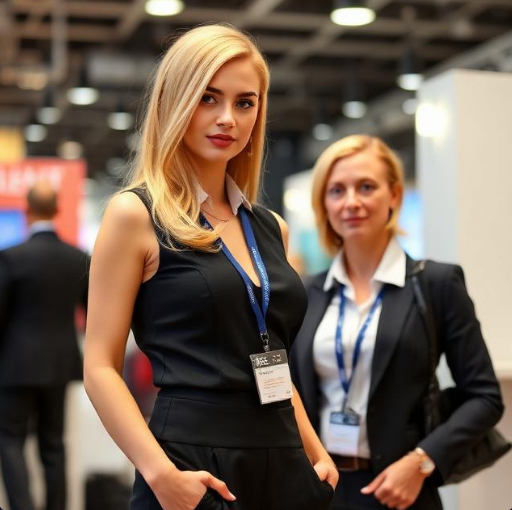
At Weldex, Rusweld, and LITMASH, technical interpreters are the essential “filler metal” connecting global welding innovators with the Russian industrial market.
In the sprawling halls of Crocus Expo and Expocentre Fairgrounds, the arc flash of welding equipment illuminates more than just metal. It lights up multimillion-dollar deals, technology transfers, and strategic partnerships. But amidst the sparks and machinery, one crucial element often goes unnoticed: the professional interpreter.
For international exhibitors at Moscow’s premier welding events—Weldex, Rusweld, and the welding section of LITMASH—the difference between a successful market entry and a missed opportunity often hinges on the precision of their linguistic support. In an industry where a single mistranslated parameter could compromise safety or derail a contract, these specialists are the unsung heroes of international trade.
The Unique Challenge of Welding Interpretation
Welding is not a single discipline but a fusion of material science, electrical engineering, and mechanical automation. This complexity creates unique challenges for interpreters that go far beyond general business translation.
1. Extreme Terminology Precision
The vocabulary of welding is highly specialized. Terms like GMAW (Gas Metal Arc Welding/MIG) , GTAW (Tungsten Inert Gas Welding/TIG) , FCAW (Flux-Cored Arc Welding) , and SAW (Submerged Arc Welding) are not interchangeable. A confusion between solid wire and flux-cored wire could lead to improper material selection, resulting in weld failures or even safety hazards.
Interpreters must also be fluent in the language of welding parameters—amperage, voltage, wire feed speed, travel speed, and shielding gas composition (argon, CO2, helium blends). When a Chinese manufacturer explains the advantages of pulsed MIG welding for controlling heat input on thin aluminum sheets, the interpreter must convey not just the words but the technical rationale behind them.
2. Cross-Disciplinary Knowledge
A single welding demonstration may involve multiple engineering domains. The interpreter might need to explain:
- Metallurgy: How different base materials (carbon steel, stainless steel, aluminum alloys) behave under heat
- Mechanical Engineering: The motion control of robotic welding arms and positioners
- Non-Destructive Testing (NDT) : Methods like ultrasonic, radiographic, or dye penetrant inspection used to verify weld quality
Without a solid grasp of these interconnected fields, an interpreter cannot accurately convey the true value proposition of advanced welding solutions.
3. Navigating Russian Certification Standards
Perhaps the most daunting challenge for foreign exhibitors is the regulatory landscape. The Russian Federation and the Eurasian Economic Union have stringent requirements for welding procedures and personnel qualifications. Central to this is the NAKS (National Agency for Welding Control) certification system.
NAKS certification is often a prerequisite for any welding work performed on critical infrastructure in Russia—pipelines, pressure vessels, bridges, and nuclear facilities. An interpreter working in this space must be able to explain how a foreign company’s welding procedure specifications (WPS) and welder performance qualifications (WPQ) can be aligned with or certified under NAKS requirements. This is not standard translation; it is regulatory navigation.
The Key Events on Moscow’s Welding Calendar
The demand for specialized welding interpreters peaks during Russia’s major industrial exhibitions. These events draw thousands of professionals from across the country and beyond.
| Event | Venue | Frequency | Focus |
|---|---|---|---|
| Weldex | Crocus Expo, Pavilion 2 | Annual (October 2026) | Russia’s leading international welding exhibition for 23+ years. Covers machinery, services, and solutions for oil/gas, shipbuilding, energy, metallurgy, and construction. UFI & RSVYa certified. Features conference program with 60+ speakers. |
| Rusweld | Crocus Expo | Annual (May 2027) | Held within Russian Industry Week. Brings together leading manufacturers of welding and cutting equipment, including major brands like CEBORA, REHM, and domestic leaders like Svarog. |
| LITMASH | Expocentre Fairgrounds | Annual | International trade fair for metallurgy and foundry machinery. Includes a dedicated welding, cutting, and joining technology section. Attracts representatives from aerospace, automotive, and heavy engineering sectors. |
The Translator’s Role: Beyond Words
A professional interpreter at a Moscow welding exhibition provides services that extend far beyond simple language conversion.
Technical Dialogue as “Precision Conduction”
Skilled interpreters serve as “precision conductors” for technical conversations. They do not merely parrot phrases; they actively ensure that the electrical engineer’s explanation of waveform control in a digital welder is accurately understood by a Russian plant manager. They can explain in fluent Russian how a laser hybrid welding system reduces heat-affected zone distortion while increasing travel speed.
Real-Time Demonstration Synchronization
During live equipment demonstrations, the interpreter must work simultaneously with the technician. As the technician adjusts parameters and performs a weld pass, the interpreter explains each step to the audience—why a specific oscillation pattern is used, how the arc starts are controlled, or why a particular shielding gas mixture optimizes penetration and bead appearance. This live synchronization transforms a simple demo into a compelling technical sales pitch.
Negotiation and Trust Building
Russian industrial buyers value reliability, durability, and after-sales support. An experienced interpreter understands the cultural context and can frame a Chinese supplier’s capabilities in terms that resonate with Russian buyers—emphasizing long-term partnership, proven quality systems (ISO 3834 for welding), and commitment to local service infrastructure -2.
Finding the Right Welding Interpreter: Selection Criteria
Not every Russian-speaking interpreter can handle the demands of a welding exhibition. Industry experts recommend the following criteria for selection:
1. Sub-Domain Specialization
Welding is broad. Determine whether your focus is robotic welding systems, welding consumables and corrosion protection, cutting and automation, or NDT and inspection. Prioritize interpreters with educational backgrounds or project experience in mechanical engineering, materials science, or manufacturing.
2. Terminology Mastery
Test potential interpreters with scenario-based questions. Ask them to explain the difference between solid wire and flux-cored wire in Russian, or to describe how digital inverter technology improves arc stability. A competent interpreter should transition between English/Chinese and Russian technical vocabulary fluidly.
3. Pre-Event Preparation
Professional agencies offer pre-event knowledge synchronization. This includes providing the interpreter with product catalogs, technical white papers, process videos, and a custom terminology glossary. Some arrange pre-show video calls between the interpreter and the exhibiting company’s engineers to ensure alignment on key selling points.
4. Crisis Responsiveness
Welding exhibitions are dynamic. A machine may malfunction mid-demonstration. A potential buyer may ask an unexpected technical question about welding thick-section steel in cold environments. The interpreter must have the quick learning ability and poise to handle these on-the-fly challenges.
A Changing Market: New Demands and Language Pairs
The geopolitical landscape has shifted the dynamics of Russia’s industrial market. With changes in supply chains, the most sought-after language pairs at Moscow welding exhibitions are evolving. While English remains a global standard, Mandarin Chinese is increasingly a premium skill, as Chinese manufacturers of welding equipment, laser cutting systems, and automation solutions fill gaps in the Russian market.
Companies like Nina Laluyeva, a professional interpreter specializing in Chinese, Russian, and English with experience since 2017, exemplify this new breed of industrial linguist. Her profile highlights not just language skills but deep understanding of technical terminology and the specifics of B2B negotiations in the industrial sector -8. Similarly, independent linguists like Sofia offer daily rates starting from €120 for exhibition and negotiation support, specializing in metallurgy and heavy machinery.
The Cost of Quality
Professional technical interpretation is an investment. Rates vary based on specialization, experience, and the nature of the assignment.
| Service Type | Typical Rate Range (RUB) |
|---|---|
| Standard Exhibition Support | ~10,000 RUB/day |
| Technical Interpreter (Welding) | ~10,000 RUB/day |
| Senior Industrial Interpreter | ~12,000+ RUB/day |
In the high-stakes, high-precision world of welding, cutting, and joining technology, you cannot rely on translation applications. An app cannot interpret the nuance of a negotiation about delivery timelines for a custom robotic welding cell, nor can it ensure that your technical documentation is compliant with NAKS certification requirements.
As the Russian proverb goes, “Trust is forged like steel—with heat and pressure.” In Moscow’s welding exhibitions, trust between international suppliers and Russian buyers is forged through precise, knowledgeable, and culturally aware interpretation.
A professional welding interpreter is not a luxury add-on; they are the essential “filler metal” that joins technical capability to commercial opportunity. They translate not just words, but weld procedures, safety standards, and business intentions.
For any international firm looking to make a lasting impression at Weldex, Rusweld, or LITMASH, hiring a specialized technical interpreter is not an administrative detail—it is the first, and most critical, step toward a successful market entry. When the sparks fly and the robots weld, make sure your message lands with the precision it deserves.
