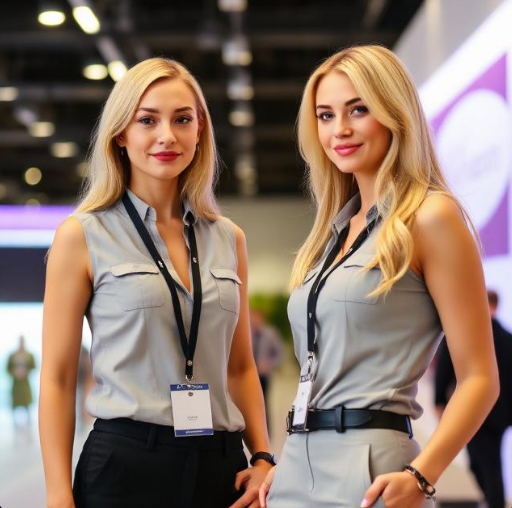
At MAKS, HeliRussia, and NAIS, technical interpreters are the invisible pilots navigating multimillion-dollar aerospace deals.
In the cavernous halls of Crocus Expo or under the open sky at Zhukovsky International Airport, the roar of jet engines is not the only sound of commerce. Beneath the wings of Sukhoi Superjets and Mi-8 helicopters, a quieter, more precise form of engineering is taking place: communication.
For international exhibitors at Moscow’s prestigious aviation events—such as MAKS (International Aviation and Space Salon) , HeliRussia, and NAIS (National Aviation Infrastructure Show) —the difference between signing a multimillion-dollar contract and going home empty-handed often rests on the shoulders of one person: the technical interpreter.
The “Aviation-Grade” Linguist
Unlike general trade fairs, Moscow’s aircraft industry shows operate with a unique set of risks and technical requirements. The standard “fluent speaker” will not suffice here.
The stakes are astronomical. At events like MAKS, which ranks among the top three global aviation forums alongside Le Bourget and Farnborough, delegations from China, Saudi Arabia, Qatar, and Turkey gather. The presence of senior government and defense officials adds layers of protocol that general interpreters are not trained to handle.
According to agencies specializing in this high-stakes environment, an interpreter in this field must possess three distinct skill sets simultaneously:
- Technical Lexicon: They must be fluent in the specific jargon of avionics, MRO (Maintenance, Repair, and Overhaul), UAVs, and ground handling equipment. A single mistranslated digit in a load-bearing calculation could lead to disaster—not just a lost sale, but a potential safety hazard.
- Diplomatic Polish: The audience includes representatives from the Russian Ministry of Transport and Rosaviation (Federal Air Transport Agency). The interpreter must navigate government protocol as easily as corporate negotiation.
- Industrial Stamina: Whether standing for ten hours on concrete at HeliRussia or working outdoors in the variable Moscow summer at Zhukovsky, physical endurance is a non-negotiable asset.
Beyond Words: Cultural Mediation & Lead Qualification
For a foreign company—particularly those from China, Germany, or the US—the Russian business culture can be a minefield. The interpreter at these shows acts as a cultural bridge, preventing costly faux pas.
“You are not just a dictionary,” explains one industry briefing for interpreters. “If you can explain the difference between an Mi-8 and an Mi-26 before the engineer steps on the floor, you are worth triple the rate”.
The responsibilities extend into active sales support:
- Lead Qualification: During public days at MAKS, which can attract up to 300,000 daily visitors, the interpreter helps filter lookie-loos from legitimate procurement officers, ensuring that engineers only speak to serious buyers.
- Real-Time Negotiation: For a firm looking to sell avionics to a Russian airline, the interpreter must handle simultaneous translation of technical specs while managing the tone of aggressive negotiation.
- Logistics Management: High-level delegations often require the interpreter to manage hospitality—arranging transportation from Moscow, booking accommodations, and ensuring adherence to strict Russian business etiquette.
The Training Ground: Specialized Education
The demand for these professionals has become so specific that it has reshaped education. The Moscow Aviation Institute (MAI) , a leading Russian technical university, has developed a specialized curriculum for “linguists-engineers”.
According to academic research, teaching interpretation for aerospace involves more than grammar. Students must master:
- Terminological databases specific to aircraft design and maintenance.
- Cultural awareness regarding international trade regulations.
- The ability to read blueprints and technical parts lists in real time.
Companies like Transtech have also built proven track records in providing linguistic support for aviation, including training foreign specialists at Russian training centers and supporting equipment handover and warranty maintenance. This training is vital because precision in technical translation is not optional—it is a matter of safety.
The Key Events on Moscow’s Aerospace Calendar
The demand for these specialized professionals peaks during Russia’s major aviation exhibitions:
| Event | Venue | Frequency | Focus |
|---|---|---|---|
| NAIS (National Aviation Infrastructure Show) | Crocus Expo, Moscow | Annual | Civil airport infrastructure, ground handling equipment, attracting 10,000+ visitors |
| HeliRussia | Crocus Expo, Moscow | Annual | Helicopter industry, drones, medical evacuation units (25,000 sqm) |
| MAKS (International Aviation and Space Salon) | Zhukovsky Airport | Biennial (odd years, next in 2026) | Flagship event featuring Russian aerospace giants (Rostec), aerobatic teams (Swifts, Russian Knights), and commercial aircraft |
A Shifting Market: Sanctions and New Language Demands
Working in Moscow today requires an additional layer of geopolitical awareness. Since the imposition of international sanctions, the structure of Russian aviation has shifted dramatically. Many Western OEMs have withdrawn, creating a vacuum filled by Russian domestic suppliers, Turkish firms, and Chinese manufacturers.
As a result, the most sought-after language pairs in Moscow are shifting. While English remains a global standard, Mandarin Chinese and Turkish are now premium skills at shows like NAIS and HeliRussia.
Interpreters now find themselves translating not just sales pitches, but complex discussions about parallel imports, maintenance outsourcing, and parts certification under new regulatory regimes.
The Human Touch in a High-Tech World
In the high-tech, high-trust world of aerospace, you cannot rely on translation apps. An app cannot read the room during a tense negotiation regarding delivery timelines, nor can it ensure that a visiting CEO doesn’t inadvertently insult a Russian official with an inappropriate handshake or business card exchange.
This sentiment is echoed by visitors themselves. Michael Enslin, an Australian tourist who attended MAKS 2013 with a professional interpreter, wrote: “As an interpreter she is excellent and I found her broad knowledge of English exceptional… She worked long days to ensure we had a good trip and everything went very well.”
For any international firm looking to break into the Russian aviation market, hiring a professional interpreter from a specialized Moscow agency is not an administrative detail—it is the first line of due diligence.
As the old aviation saying goes, “The takeoff is optional, but the landing is mandatory.” In Moscow, a good interpreter ensures that both happen smoothly.