Moscow has long been recognized as the engine room of Russian industry, and nowhere is this more evident than in the automotive sector. From the bustling assembly lines of major international joint ventures to the high-stakes negotiation floors of global parts suppliers, the city is a vital hub for vehicle manufacturing, aftermarket services, and technological innovation.
For international companies looking to tap into this vast market, the path to a successful contract is often paved with highly specialized technical language. General translation services simply do not suffice when discussing engine calibration, supply chain logistics, or compliance with Eurasian Economic Union (EAEU) safety standards. This is where the Automotive Industry Interpreter becomes an indispensable strategic asset—a professional who ensures that not a single horsepower (or ruble) is lost in translation.
The Landscape: More Than Just Car Parts
The demand for automotive interpreters in Moscow is driven by two major forces: Manufacturing Localization and Aftermarket Trade.
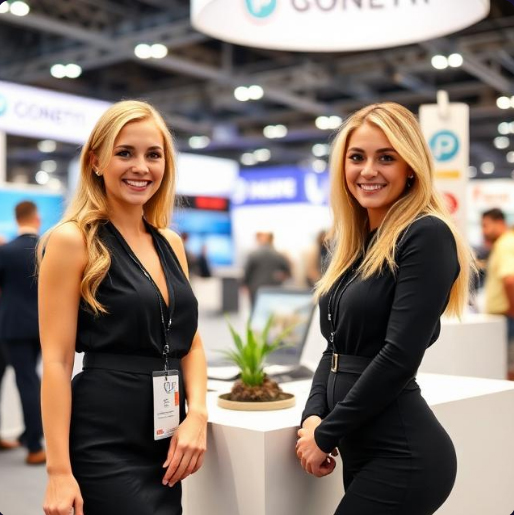
On the manufacturing side, companies like Autoframos (Renault-Nissan) and various local holding groups require constant communication between Russian engineers and foreign technical experts. On the trade side, events like MIMS Automechanika Moscow and COMTRANS transform the Expocentre Fairgrounds into a multilingual melting pot of buyers and sellers. These events attract over 1,200 companies from 41 countries, including giants like Bosch, Valeo, ZF, and Schaeffler.
Technical Vocabulary: The Heart of the Matter
An automotive interpreter in Moscow must possess a mastery of terminology that goes far beyond the word “car” (машина). They must be fluent in the specific language of:
- Manufacturing Processes: Understanding foundry, forging, stamping, heat treatment, and assembly line logistics.
- Components: Distinguishing between various engine parts, transmission systems (автоматическая/механическая коробка передач), and braking systems.
- Electrification: With the shift toward EVs, interpreters now handle terms related to battery efficiency, charging infrastructure, and autonomous driving features.
As noted by experts at MoscowInterpreters.Ru, translation for the automotive industry is “an extremely difficult and responsible task” that can only be performed by specialists who know the specifics of the technology, from powder metallurgy to protective coating.
Key Events Driving Demand
If you are sourcing an interpreter in Moscow, you will likely encounter these major industry touchpoints:
MIMS Automechanika Moscow
Held at Crocus Expo, this is the leading business platform for the automotive parts, components, and maintenance equipment sectors. Notably, the event features a dedicated area for interpreters, particularly between Chinese suppliers and Russian buyers, highlighting the critical role of cross-border communication in the supply chain.
COMTRANS
Focused on commercial vehicles, this show attracts heavy machinery manufacturers and logistics firms.
Electric & Hybrid Vehicle Trade Shows
As Moscow cements its position in sustainable transport, events like EDrive and ElectroTrans are growing rapidly, requiring interpreters fluent in the jargon of green technology and government regulations.
The Interpreter’s Role in the Value Chain
A specialized automotive interpreter contributes far more than linguistic accuracy. They serve as a cultural and technical bridge in several high-stakes scenarios:
1. Technical Documentation & Localization
Before a single bolt is turned, thousands of pages of manuals must be translated. Agencies like MoscowInterpreters.Ru have handled massive projects, such as translating over 12,000 pages of technical process schemes, workplace drawings, and maintenance instructions for Russian automakers. Interpreters must ensure that the terminology used in these documents is consistent with the spoken language on the factory floor.
2. On-Site Factory Supervision
When a foreign team installs a production line at a plant like GAZ or KamAZ, interpreters work alongside engineers. They facilitate “pre-commissioning activities,” translating instructions from foreign supervisors to Russian fitters in real-time. This prevents costly installation errors.
3. High-Level Commercial Negotiations
Interpreters are often present during the closing of syndicated loans or joint ventures. For example, MoscowInterpreters.Ru has provided services for a Russian automobile holding securing a syndicated loan from a banking consortium led by a major British bank. In this context, the interpreter must be equally adept at legal finance terminology and automotive production metrics.
4. Exhibition Booth Management
At MIMS Automechanika, the atmosphere is fast-paced. Interpreters stand shoulder-to-shoulder with sales teams, translating technical questions from Russian engineers into English (or Chinese/German) and relaying answers. Because 80% of visitors to these shows come specifically to find new suppliers, the interpreter is often the critical link that converts a casual visitor into a buyer.
Selecting the Right Automotive Interpreter
Choosing the right linguistic partner for your Moscow operations requires vetting for specific criteria:
- Industry Background: Does the interpreter or agency have a client list that includes OEMs? Neotech, for instance, is a top Russian LSP that certified to ISO 9001:2000 standards, with key expertise specifically in “vehicle manufacturing”.
- Technical Experience: Look for proof of handling technical manuals. MoscowInterpreters.Ru Translation Agency highlights their translators started careers in the “translation departments of automotive enterprises” in Nizhny Novgorod, the “Russian Detroit”.
- EV & Modern Tech Knowledge: If your product is related to the new energy vehicle (NEV) sector, ensure the interpreter is familiar with battery technology and autonomous systems.
- Certification: For legal contracts and customs documents (which are rampant in the auto parts trade), an interpreter with notarization capabilities or court certification is invaluable.
The Cost of Miscommunication
In the automotive world, precision is safety. A misinterpretation of “torque specification” could lead to a mechanical failure; a mistranslation of “hazardous material” in a logistics contract could result in legal penalties.
The rates for professional interpreters in Moscow vary based on expertise. Generalist interpreters might start at lower hourly rates, but specialized automotive technical interpreters command a premium—often ranging from €150 to €200 per day for a seasoned professional. This investment is marginal compared to the cost of a recalled part or a failed joint venture.
As the Russian automotive industry navigates the shift toward electrification and import substitution, the need for precise, technical communication has never been higher. Whether you are a Chinese parts manufacturer looking to staff a booth at MIMS Automobility, or a German engineer commissioning a press line in the suburbs of Moscow, the local automotive interpreter is your most vital partner.
They ensure that when the blueprints are laid out and the contracts are signed, everyone—from the boardroom in Detroit to the workshop in Moscow—speaks the same technical language.