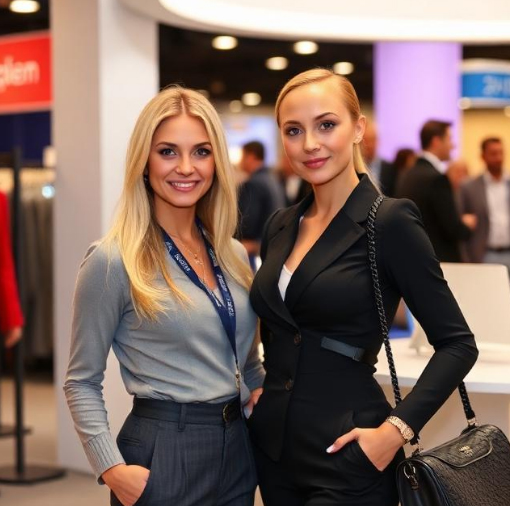
In the cavernous halls of Moscow’s Timiryazev Centre, the air is thick with the scent of grain, industrial lubricant, and the low hum of heavy machinery. At the Meat & Poultry Industry Russia (MAP Russia) exhibition, held annually since 2001, the global poultry and meat industry converges. The attendees are not casual browsers; they are farm owners, procurement managers from retail giants, engineers, and government regulators from Rosselkhoznadzor. For international exhibitors—who now make up a staggering 80% of participants, with major contingents from China, Turkey, Brazil, and India—the key to unlocking the Russian market is not just the technology on display, but the professional standing beside it: the specialized Russian booth interpreter.
More Than a Translator: The Agro-Linguist
In the high-stakes B2B environment of a poultry trade show, a mistranslation can cost millions of rubles. A standard interpreter or a mobile app is not sufficient here. The profession has evolved into a highly technical discipline requiring what industry professionals call an “Agro-Linguist”.
These interpreters must possess a mastery of domain-specific terminology that spans the entire “from feed to food” production chain. This includes:
- Veterinary Science: Terms related to vaccination protocols, “avian leukosis,” and biosecurity.
- Poultry Genetics: Breeding lines, hatchery efficiency, and “broiler” management.
- Processing & Equipment: Automated slaughter lines, “feed conversion ratios,” HACCP certification, and cold chain logistics.
- Feed & Additives: The chemical composition of feed, grain storage, and milling technology.
As one staffing expert noted, the difference between a general translator and a specialized one is the ability to instantly differentiate a “feed dispenser” from a “feed mixer” in technical Russian, ensuring that complex ideas are transmitted with perfect fidelity.
Core Responsibilities: The “Invisible” Technical Sales Force
The role of an interpreter at MAP Russia goes far beyond passive translation. They function as an active, strategic component of the exhibitor’s team.
- Technical Interpretation & Demonstration: When a Chinese manufacturer like ZENYER introduces an automated egg-sorting robot or a Brazilian company like BTA Additives presents a new feed additive, the interpreter provides consecutive or simultaneous interpretation during technical demos. They ensure that the precise technical parameters—the sorting capacity, the dosage rates, or the mechanical specifications—are understood without error.
- Cultural Mediation & Business Protocol: Success in the Russian market hinges on building trust-based personal relationships (отношения), a practice that differs significantly from Western business norms. A skilled interpreter acts as a cultural mediator, guiding exhibitors on appropriate etiquette and ensuring that nuances in communication are not lost in translation.
- High-Stakes Negotiation: The climax of the show often occurs in the negotiation zones, where contracts are signed. Here, the interpreter facilitates high-level discussions between executives and potential distributors, making sure every term—from payment schedules to technical support—is crystal clear.
- Lead Qualification & Brand Image: With over 10,000 visitors expected, experienced interpreters help identify decision-makers among the crowd, saving sales teams valuable time. They also serve as the face of the company, reflecting professionalism and building credibility.
Investment and Selection
Given the strategic importance of communication, international exhibitors must carefully select their linguistic partners. Agencies specializing in agricultural shows look for a proven track record in the industry and prepare their staff with specific glossaries relevant to the exhibitor’s niche.
The cost structure for specialized services in Moscow reflects this technical demand:
- Booth Hostess: 800 – 1,500 RUB/hour (primarily for reception and basic information).
- Technical Interpreter: 2,000 – 3,000 RUB/hour (for handling complex technical specifications and negotiations).
In the competitive arena of international agribusiness, leaving communication to chance is a risk no serious company can afford. As Russia continues to pivot its agribusiness imports toward friendly nations—a key theme at the 25th MAP Russia anniversary in 2026—the demand for these specialized professionals is only growing. The Russian booth interpreter is not a “linguistic accessory”; they are a strategic investment. They are the force multipliers who ensure that advanced technology, superior genetics, and innovative solutions are not just seen, but fully understood and trusted by the Russian market.