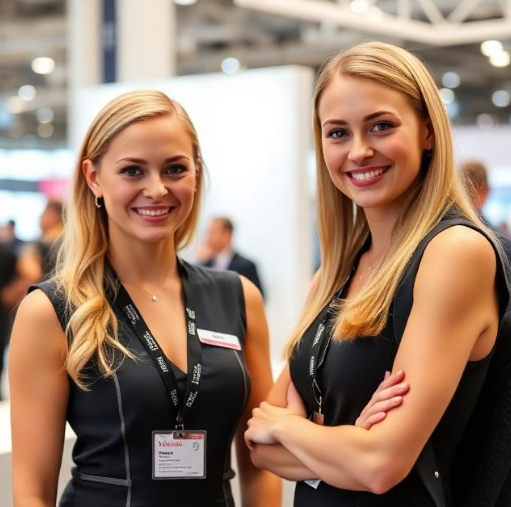
Moscow, Russia – Deep in the negotiation halls of a Moscow headquarters, a team of Norwegian engineers is discussing subsea well intervention technology with their Russian counterparts from a major oil producer. Across town, at the Timiryazev Centre, Chinese and Russian business leaders are huddled over prototypes of solar inverters and electric vehicle charging stations at the RENWEX exhibition. The common thread in both high-stakes scenarios? A specialized breed of linguist: the energy industry interpreter.
As Russia continues to play a pivotal role in global energy markets—from the depths of the Arctic to the cutting edge of renewable tech—Moscow has cemented its status as a critical hub for technical dialogue. Here, interpreters are not mere word-for-word translators; they are subject matter experts, cultural liaisons, and often, the key to multi-billion dollar deals.
More Than Just Vocabulary
Unlike general business interpreting, the energy sector demands an encyclopedic knowledge of specialized engineering and geology. For interpreters working in Moscow, the lexicon includes the physics of “associated petroleum gas,” the mechanics of “Gravity Based Structures” for Arctic drilling, and the chemistry of “hydrocracking” in oil refining.
Major Russian cities have long depended on complex energy infrastructure—for instance, the Moscow Oil Refinery supplies 40% of the fuel needs for the entire Moscow Region. When Western firms collaborated on modernizing units like the “Euro+” refinery, linguists had to master technical drawings, AutoCAD files, and safety protocols under immense pressure, translating up to 500 pages per day to keep construction on schedule.
The Titans of Technical Interpretation
The demand for highly skilled energy interpreters in Moscow is reflected in the backgrounds of the professionals filling these roles. Unlike freelancers who pick up odd jobs, senior energy interpreters often have backgrounds in engineering or decades of field experience.
The Localization Logistics of Mega-Projects
For an energy interpreter in Moscow, “simultaneous interpretation” at a conference is just the tip of the iceberg. The real work often happens in “full linguistic support” for massive infrastructure projects.
A case study from the Amur Gas Processing Plant, one of the world’s largest, reveals the scale: interpreters and translators provided support for legal, financial, and procurement documentation, translating over 100,000 pages of diagrams and technical specs.
Furthermore, the push for localization means that interpretors must work hand-in-hand with CAT (Computer-Assisted Translation) tools. In projects for Mosenergo (the largest generating company in Russia), linguists used Trados Studio to manage translation memories, ensuring that the term “steam turbine” translated exactly the same way on page one of a manual as it did on page 5,000 of a safety regulation. One project involved translating 15 million words and handling 50,000 pages of desktop publishing in just 11 months.
The Pivot to Renewables
The energy landscape is shifting, and so is the interpreting industry. As Russia develops its green energy sector, events like the RENWEX exhibition in Moscow have created a surge in demand for interpreters specializing in renewable energy and electric vehicles.
At these events, the terminology shifts from drilling rigs to wind turbines, hydrogen power, and solid household waste recovery. Chinese-Russian interpreter pairs are particularly in demand here, as Chinese manufacturing giants and Russian infrastructure firms seek to close deals on EV charging networks and solar panel installations.
The Bottom Line
In the high-stakes world of Russian energy, a misunderstood technical detail can lead to catastrophic safety failures or legal battles costing millions. Consequently, the role of the Moscow energy interpreter has evolved from a “service provider” to a strategic partner.
Whether it is ensuring the safety of personnel in a hydrogen sulfide environment or bridging the gap between a Silicon Valley software architect and a Russian mining engineer at the Baimsky copper and gold deposit, these professionals are the invisible heroes of the global energy supply chain. In Moscow, they don’t just translate words; they translate power.