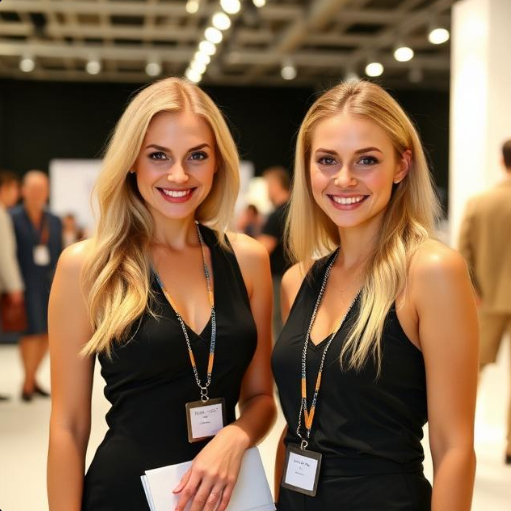
Moscow has become one of the world’s most dynamic and complex beauty markets. With Western brands adjusting their presence and manufacturers from Asia, Turkey, and the Middle East rapidly expanding, the Russian beauty industry is undergoing a historic transformation. At the center of this commercial revolution are the trade shows: events like InterCHARM attract over 1,600 exhibitors and tens of thousands of professionals annually.
But for international brands hoping to capture this lucrative market, a beautiful booth and high-quality products are simply not enough. You need a specific professional: the beauty industry interpreter.
Why Standard Interpreters Struggle with Beauty
At first glance, a cosmetics exhibition might seem like a standard consumer goods fair. However, the perfume and cosmetics industry has a unique language and sales psychology that generalist interpreters often fail to grasp.
1. Highly Specialized Terminology
The beauty industry is a fusion of chemistry, biology, and marketing. A mistranslated ingredient can ruin a deal. Consider the complexity of a single conversation:
- Chemistry: You need to explain hyaluronic acid (гиалуроновая кислота), peptides (пептиды), and nanotechnology (нанотехнологии).
- Tools and Equipment: You may need to describe microcurrent devices (микротоковый аппарат) or ultrasonic spatulas (ультразвуковая спатула).
- Results and Claims: You must promise lifting effects (лифтинг-эффект), skin barrier repair (восстановление кожного барьера), and matte finishes (матовый финиш).
A general translator might simply say “wrinkle cream,” but a beauty specialist understands the distinction between an anti-ageing cream (антивозрастной крем) and a product that delivers a botox-like effect (эффект, как после ботокса). These nuances are critical in a sophisticated market like Russia. The Russian perfume and cosmetics industry even has its own GOST standard (ГОСТ 32048-2013) establishing official terms and definitions for the sector.
2. The Emotional “Sell” – Translating Feelings
Beauty is fundamentally emotional. Russian consumers are highly educated about cosmetics and expect detailed, evocative explanations of how a product makes them feel.
- The risk: A literal translator might say, “This powder reduces oil.” This sounds clinical and unappealing.
- The professional approach: A beauty interpreter adapts the message to the local culture, saying, “This powder creates a matte finish (матовый финиш) for a flawless complexion (безупречный цвет лица), leaving your skin feeling velvet-soft (бархатистая мягкость)”.
This “emotional translation” is where a specialist shines. They understand that their role is not just to convey facts, but to tell a compelling story about your brand.
3. Visual and Aesthetic Alignment
Unlike legal or technical interpreting, beauty interpreting is deeply visual. The interpreter is often standing beside you as you point at a model, a before-and-after photo, or a texture sample. They must be able to describe what they see in vivid, persuasive Russian. The messenger, too, is part of the message.
The Beauty Show Landscape in Moscow
Most major beauty events in Moscow take place at the Crocus Expo International Exhibition Center. This venue is vast, requiring significant stamina from both exhibitors and interpreters.
The undisputed flagship event is InterCHARM. Held annually in October, it is the largest international exhibition for the perfume and cosmetics industry in Russia, Eastern Europe, and the CIS. In 2026, InterCHARM will run from October 14 to 17 at Crocus Expo, Pavilion 3. The exhibition covers a comprehensive range of sectors:
- Cosmetology and Aesthetics: Professional cosmetics, injectable cosmetology, and hardware equipment.
- Perfumery: The La NICHE sector for niche, exclusive fragrances.
- Manufacturing and Packaging: Raw ingredients, contract manufacturing (OEM/ODM), and packaging solutions.
- Professional Services: HairCHARM, NailCHARM, and MakeUpCHARM sectors for stylists and masters.
- Retail and Distribution: Connections with major Russian retail chains through the Retail Connect program.
What to Look for in a Beauty Interpreter
When sourcing a Russian interpreter for a beauty trade show, look beyond standard language certifications. Prioritize the following traits:
1. Specialized Industry Knowledge
Review the interpreter’s resume for specific experience. Do they know the difference between a concealer (консилер), a corrector (корректор), and BB-cream (BB-крем)? Do they understand cosmeceuticals (космецевтика)?.
- Pro Tip: Send the candidate a list of 20 random ingredients from your product catalog. If they hesitate on “niacinamide” or “squalane,” look elsewhere.
2. Professional Image and “High Beauty IQ”
In this industry, appearance matters. An interpreter who shows up in wrinkled clothing or without appropriate styling reflects poorly on your brand. They should dress stylishly and professionally, appropriate for a luxury or premium environment.
3. Marketing and Sales Acumen
The best beauty interpreters in Moscow have backgrounds in marketing, journalism, or public relations, not just linguistics. They understand Russian advertising regulations and consumer psychology. A literal translation of your marketing claims can sound flat; a skilled interpreter knows how to adapt the message to resonate with Russian sensibilities.
4. Stamina and Energy
The beauty floor is loud, crowded, and intense. Russian buyers ask deep technical questions and expect detailed answers. Your interpreter needs the mental and physical energy to maintain accuracy, poise, and enthusiasm for 3–4 consecutive days.
Preparing Your Interpreter for Success
Once you hire an interpreter, you must invest time in preparation:
- Send a glossary: Provide a “Russian Terminology Sheet” at least two weeks before the show. Include your top 50 ingredients and your key marketing claims.
- Hold a briefing call: Explain your brand voice. Are you clinical, playful, or luxurious? Let the interpreter hear your tone and understand your values.
- Allow product testing: Let the interpreter touch, smell, and feel the product. If it is a serum, let them feel the texture so they can accurately describe it in Russian.
In the high-stakes world of Moscow’s perfume and cosmetics trade shows, your interpreter is far more than a translator. They are your brand ambassador, your cultural liaison, and your sales closer. A poor interpreter can make a luxury product sound generic; a great interpreter can transform a clinical ingredient list into a compelling Russian love story.
As the Russian beauty market continues to evolve, with new international entrants and local brands competing fiercely, the demand for specialized beauty interpreters is booming. Do not leave your success to chance. Invest in a professional who understands the science of the skin and the art of the sale.