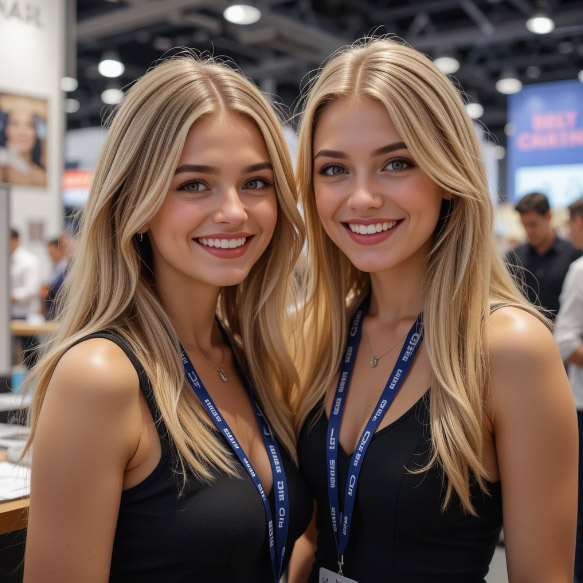
The Moscow Multimedia Technologies Fair is a sensory explosion—a dynamic crossroads where the future of digital experience is built. It’s where cutting-edge VR immerses users in new worlds, powerful audio software engineers the next hit record, and 8K displays redefine visual clarity. For international innovators, it’s a prime opportunity to engage with Russia’s vibrant tech, gaming, and creative industries.
But in an environment where the product is often an intangible experience defined by technical precision and creative vision, communication is everything. You’re not just selling a piece of hardware or software; you’re selling a capability, a feeling, an edge. To articulate this complex value, you need more than a dictionary; you need a professional interpreter who is fluent in the languages of both technology and creativity.
The Language of Pixels and Soundwaves: Why Generalists Fail
The lexicon of multimedia is a unique fusion of engineering, computer science, and artistic expression. A literal translation will strip away the nuance that defines quality, leading to a catastrophic flattening of your product’s value proposition.
A specialized multimedia interpreter does not just translate words; they translate specifications, user experiences, and creative potential. They understand that a “low-latency audio interface” is prized for enabling real-time recording, not just for a technical spec sheet.
Critical Terminology Requiring Expert Rendering:
- Audio Technology: Звуковая карта (zvukovaya karta – sound card), задержка (zaderzhka – latency), миди-контроллер (midi-kontroller – MIDI controller), цифровая звуковая рабочая станция (DAW – tsifrovaya zvukovaya rabochaya stantsiya – Digital Audio Workstation).
- Video & Visuals: Разрешение (razresheniye – resolution), частота кадров (chastota kadrov – frame rate, FPS), цветовой охват (tsvetovoy okhvat – color gamut), рендеринг (rendering – rendering), моушен-дизайн (moushen-dizayn – motion design).
- VR/AR & Interactive Tech: Виртуальная реальность (VR – virtual’naya real’nost’), дополненная реальность (AR – dopolnennaya real’nost’), отслеживание движений (otslezhivaniye dvizheniy – motion tracking), иммерсивный опыт (immersivnyy opyt – immersive experience).
- Software & Development: Интерфейс программирования приложений (API – interfeys programmirovaniya prilozheniy), патч (patch – patch/update), исправление ошибок (ispravleniye oshibok – bug fix), игровой движок (igrovoy dvigatel – game engine).
Your Interpreter as a Technical Evangelist and Creative Liaison
At the Multimedia Fair, your interpreter is the human interface between your technology and your audience.
- The Product Demonstrator: On the exhibition floor, they are the voice of your innovation. They don’t just say “this is a headset”; they compellingly explain the пространственное аудио (prostranstvennoye audio – spatial audio) that makes a VR game terrifyingly real or the графический процессор (graficheskiy protsessor – GPU) that allows for real-time ray tracing in a live demo.
- The Developer Relations Bridge: In technical meetings with software engineers or integration specialists, they facilitate deep-dive discussions about SDKs, API compatibility, and workflow integration. They ensure that a Russian developer fully understands how your plugin can streamline their pipeline.
- The Creative Translator: For artists, producers, and designers, they articulate the creative benefits. They translate how your software’s new brush engine enables more natural-looking concept art or how your controller’s tactile feedback enhances a musician’s performance.
- The Cultural Localizer: They understand the specific nuances of the Russian creative and tech markets—popular software, local influencers, regional design trends—allowing them to frame your product’s advantages in the most relevant and persuasive context.
Finding the Right “Codec”: Selecting Your Multimedia Interpreter
Choosing an interpreter for this field requires a specific blend of technical and creative aptitude.
- Tech-Savvy is Non-Negotiable: Look for interpreters with a demonstrable interest or background in IT, audio engineering, video production, or gaming. They should be comfortable with tech jargon and rapid innovation.
- Creative Passion: An ideal candidate is someone who appreciates the creative arts—a gamer, a music enthusiast, or a film buff—who can understand and convey the emotional impact of the technology.
- Preparation is Key: Provide them with spec sheets, software manuals, marketing videos, and a list of key features long before the event. They need to “pre-render” their vocabulary for flawless performance.
- Real-Time Processing: The ability to think quickly and adapt to live software demos and unpredictable Q&A sessions is essential.
The Bottom Line: An Investment in Immersive Communication
In the multi-sensory world of multimedia, the cost of a professional interpreter is a minor investment that ensures your technology is experienced as intended. It is the crucial driver that:
- Prevents Technical Misunderstandings that could derail integration talks.
- Maximizes Impact by ensuring your product’s most exciting features are communicated with clarity and passion.
- Builds Credibility with a technically astute audience by speaking their language fluently.
- Shortens the Sales Cycle by enabling meaningful, deep conversations with serious buyers and partners.
Before you demo your next groundbreaking technology in Moscow, ensure your message is delivered in high fidelity. Secure a professional interpreter who can accurately translate not just your words, but the entire experience you’ve worked so hard to create. They are the essential codec that decodes your innovation for the Russian market.