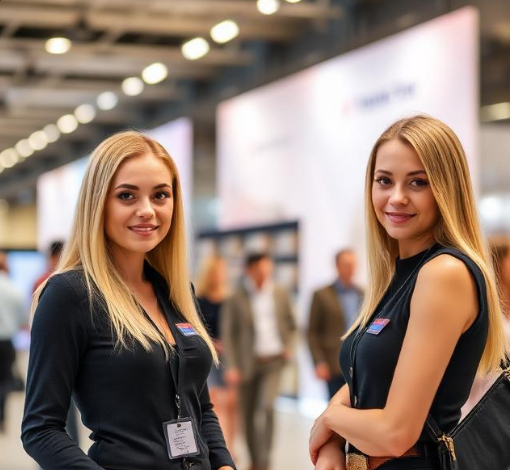
In the sprawling pavilions of Moscow’s Timiryazev Centre and Crocus Expo, a specialized professional works at the intersection of thermal engineering and international commerce. Heat&Power industry trade show interpreters in Moscow are the human interface between global manufacturers of industrial boilers, power generation equipment, and the Russian energy engineers who keep the country’s vast heating infrastructure running.
The Stage: Moscow’s Energy Exhibition Landscape
Moscow hosts two major events that define the heat and power exhibition calendar. The Heat & Power exhibition, held annually in October at Crocus Expo, is Russia’s leading specialized event for autonomous and distributed energy supply equipment, bringing together manufacturers of industrial boilers, heat exchangers, and power generation systems.
The 2026 edition runs from 19-21 October, showcasing everything from industrial boiler equipment and burners to steam turbines and gas piston power plants. This coincides with another major event: the Heat & Electro exhibition, held at the Timiryazev Centre from 19-21 May 2026. Now in its fifth year, this exhibition features over 100 companies from Russia, Belarus, Iran, Indonesia, China, and Turkey, alongside 15 industry conferences with over 150 speakers.
Both events target a highly professional audience: energy engineers, chief engineers, technical specialists, and decision-makers responsible for uninterrupted heat and power supply at industrial enterprises and municipal facilities. This is not a casual browsing crowd—these are professionals with specific operational problems to solve.
The Interpreter’s Technical Demands
Terminology Mastery
Heat and power interpreting demands command of vocabulary spanning multiple engineering disciplines. A single booth conversation might range from boiler efficiency metrics to gas turbine specifications. Key terminology includes:
| Equipment Category | Key Terms (English/Russian) |
|---|---|
| Boiler Equipment | Industrial boilers (промышленные котлы), burners (горелки), heat exchangers (теплообменники), steam generators (паровые генераторы) |
| Power Generation | Gas piston plants (газопоршневые электростанции), diesel generators (дизельные электростанции), steam turbines (паровые турбины), gas turbines (газовые турбины) |
| Piping & Valves | Pipeline systems (трубопроводные системы), gas fittings (газовая арматура), shut-off valves (запорная арматура) |
| Controls & Instrumentation | Control and measuring instruments (контрольно-измерительные приборы), automation systems (системы автоматизации), gas analyzers (газоанализаторы) |
The technical nature of this field means interpreters often require “technical competence” and “good understanding of basic principles of power station operation”. This is why many energy-specialized translation bureaus maintain engineers or technical specialists on their teams.
Beyond Translation: Strategic Roles
Working at a Heat&Power exhibition, interpreters perform functions that extend beyond linguistic conversion:
Equipment Demonstrations: When a manufacturer demonstrates a new high-efficiency burner or a gas piston power plant, the interpreter must articulate technical specifications, operational workflows, and performance metrics to Russian engineers who are evaluating equipment for purchase.
Commercial Negotiations: Discussions often involve procurement contracts worth significant sums. Interpreters must be precise when discussing pricing, delivery terms, warranty conditions, and after-sales service. One source notes that at these events, translators work “on the stands of power generation manufacturers” and participate in seminars and conferences.
Technical Tours: A new feature of the 2026 Heat & Electro exhibition is technical tours of exhibitor stands conducted by industry experts, covering heating supply and power generation themes. Interpreters supporting these tours must deliver accurate, real-time translation for international participants.
The Language Pair Landscape
The international participation at Moscow’s heat and power exhibitions drives demand for specific language combinations. According to exhibition data, international exhibitors come from Belarus, Iran, Indonesia, China, and Turkey. This creates demand for interpreters covering these language pairs with Russian.
English-Russian remains the standard requirement, as many equipment manufacturers from Europe and other regions present in English.
Chinese-Russian is increasingly vital given the significant presence of Chinese equipment manufacturers at industrial exhibitions in Moscow. Chinese companies in the renewable energy and power sectors have used professional interpreters to secure contracts worth significant amounts at Moscow energy exhibitions.
Turkish-Russian reflects Turkey’s presence among exhibitors, with Turkey consistently listed among participating countries.
Some Moscow translation bureaus explicitly list their expertise in energy and power generation, noting that their translators “participate in most exhibitions in Moscow related to energy and generation” and collect materials at these events to create specialized glossaries.
The Professional Profile
An effective heat and power exhibition interpreter must possess:
- Technical Background: Engineering, physics, or energy economics education is highly valued. Translation bureaus specifically recruit translators with “technical competence” in power generation.
- Glossary Preparation: Professional interpreters prepare by studying product catalogs, technical specifications, and company presentations. Some agencies create glossaries based on brochures, catalogs, and participant websites to maintain consistent terminology.
- Regulatory Awareness: Understanding Russian energy standards, certification requirements (EAC), and grid connection norms helps interpreters navigate discussions about compliance.
- Real-Time Processing: The exhibition floor demands quick thinking and the ability to handle technical questions from a knowledgeable audience.
- Cultural Awareness: Russian business culture values direct dialogue with technical experts. Interpreters facilitate this connection.
As Russia’s heat and power sector continues its modernization drive, exhibitions like Heat & Power and Heat & Electro have become critical platforms for international trade. In the halls of Crocus Expo and Timiryazev Centre, where procurement decisions are made by engineers evaluating equipment specifications and cost-benefit calculations, professional interpreters are not optional extras—they are essential enablers of commercial and technical exchange. By combining technical knowledge, language expertise, and industry awareness, they transform product demonstrations into qualified business opportunities, one precise translation at a time.