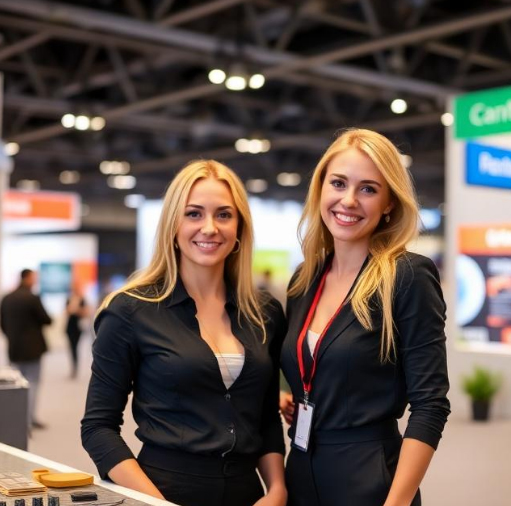
In the bustling halls of Moscow’s Crocus Expo and Timiryazev Centre, where bolts of luxurious silk meet rolls of high-tech nonwovens, a specialized professional works quietly at the intersection of language and industry. They are not just translators—they are the essential thread that weaves together international textile trade.
This is the world of the fabrics industry interpreter.
A Market Woven in Numbers
The global textile industry is a $1 trillion market, and Russia represents a significant, dynamic segment. Second only to the food industry in sales volume, Russia’s textile and light industry is experiencing a notable revival driven by import substitution policies and growing international partnerships.
At the heart of this activity are several major trade events held regularly in Moscow:
- Techtextil Russia: An international trade fair for technical textiles and nonwovens, held at Crocus Expo, covering fibers, yarns, woven fabrics, composites, and textile technology.
- InterFabric: A major international exhibition for fabrics and accessories for the clothing industry.
- INLEGMASH: The largest specialized exhibition in Russia for textile industry equipment, part of “Russian Textile Week”.
- Fashion Style Russia: An international exhibition for clothing, footwear, and accessories, also part of Russian Textile Week.
For international manufacturers and distributors, these events are the gateway to the Eurasian market. But success requires more than just innovative products—it demands precision communication.
The Technical Loom: More Than Basic Vocabulary
Textile industry interpreting is a niche that demands fluency in a highly specialized lexicon. A general interpreter, no matter how skilled, may struggle with the nuances that define this field.
The terminology covers a vast spectrum:
| Category | Examples |
|---|---|
| Fiber & Yarn | Natural fibers, chemical fibers, blended yarns, functional fibers, microfibers, technical filaments |
| Fabric Types | Wovens (warp and weft), knits, nonwovens, coated textiles, scrims, braids, composites, jacquard |
| Processing & Finishing | Dyeing, bleaching, printing, finishing, sustainable dyeing processes, biodegradable finishes |
| Technical Parameters | Thread count, GSM (grams per square meter), tensile strength, air permeability, flame resistance |
As one industry expert notes, terms like “GSM,” “MOQ” (minimum order quantity), “lead time,” and “just-in-time delivery” are common in negotiations. Clarity here is essential to avoiding costly contractual disputes.
Types of Interpretation Services
According to MoscowInterpreters.Ru, a major Moscow-based translation agency that has handled numerous textile sector projects, textile translations fall into three main categories:
- Product-Related: Descriptions, specifications, and labels for fabrics and finished goods
- Promotional Materials: Catalogs, brochures, marketing case studies, and website content
- Equipment Documentation: User manuals, safety guides, training materials for textile machinery
The agency notes that while almost any professional translator can handle clothing catalogs or articles about designers, “presentations of new fabrics and materials” or documentation for “knitting machines, embroidery machines, finishing equipment” requires specialists with in-depth knowledge.
Industry Sectors: From Fashion to High-Tech
The scope of fabrics interpreting in Moscow extends far beyond fashion design.
Technical Textiles
Industry reports highlight a growing demand for interpreters at events like Techtextil Russia. This sector covers technical textiles used in construction (geotextiles), medicine (surgical gowns, bandages), automotive (airbags, seatbelts), and protective gear (firefighter suits, bulletproof vests).
Translating for this sector requires knowledge of material science, test standards, and certification requirements.
Fashion and Apparel Fabrics
At exhibitions like Fashion Style Russia and InterFabric, interpreters help designers and buyers discuss aesthetic elements, color fastness, fabric drape, and comfort.
Industrial Machinery
INLEGMASH showcases equipment for spinning, weaving, knitting, dyeing, and finishing. Interpreters for machinery often accompany foreign technicians to Russian factories for installation and commissioning.
The Fluent Multilingual Palette
Given Russia’s diverse trade partners, fabric industry interpreters are expected to handle multiple languages. While English remains the foundation for international business, demand for Chinese has surged dramatically as China is the world’s largest producer of technical textiles.
Languages frequently needed for textile interpretation in Moscow include:
- English-Russian: The most common pair
- Chinese-Russian: Growing rapidly due to Chinese textile imports
- Turkish-Russian: Turkey is a major supplier of apparel fabrics
- Other European languages: Italian, German, French for high-end machinery
One agency notes that they work with native speakers of English, Spanish, Turkish, Kazakh, and languages with unique fonts such as Arabic or Chinese.
Cultural Nuances: Beyond Words
An effective textile interpreter does more than convert vocabulary—they contextualize. Russian procurement specialists are known for being direct, detail-oriented, and skeptical of unsubstantiated claims. They expect data sheets, test reports, and certificates to be on demand.
An interpreter serves as a cultural buffer, understanding that when a Russian buyer asks “Is this really OEKO-TEX certified?” they require specific documentation, not just a verbal yes.
Furthermore, textile standards vary significantly. Interpreters must be familiar with the differences between international certifications (like OEKO-TEX or ISO) and Russian/Eurasian requirements (GOST, EAC). As one source notes, accurate interpretation of “certification standards and safety protocols” is crucial.
Real-World Impact: From the Exhibition Floor to Million-Dollar Deals
The value of a professional textile interpreter is tangible.
At the 2025 Moscow International Textile Exhibition, a Chinese textile manufacturer used professional interpreters to secure a $6 million annual supply agreement with a well-known Russian clothing brand.
In the technical textiles sector, a Chinese manufacturer of fire-protective materials successfully demonstrated its products through professional interpreters, securing purchase orders from multiple Russian emergency services departments.
Finding the Right Interpreter
For companies planning to attend Moscow textile fairs, choosing the right interpreter requires specific considerations:
- Verify Technical Background: Look for candidates with textile engineering, material science, or chemistry education
- Test Industry Terminology: Ask candidates to explain concepts like “nanofibers,” “spunbond technology,” or “GSM”
- Provide Advance Materials: Share technical data sheets and product catalogs with the interpreter at least one week before the event
- Request Certification Knowledge: Ensure familiarity with OEKO-TEX, GOST, and EAC requirements
Some agencies offer comprehensive support including pre-show terminology training, on-site consecutive interpretation, and post-show follow-up document translation.
Conclusion: Weaving Global Partnerships
The fabrics industry interpreter in Moscow is far more than a walking dictionary. They are a strategic asset—part engineer, part linguist, part cultural diplomat.
As one industry observer aptly put it, the presence of a professional interpreter at the Moscow Textiles Fair “is not an added cost—it is an investment in precision, professionalism, and profitability”.
In a world where a misread specification about fabric weight or a confused translation of a safety standard can unravel months of procurement planning, these specialized professionals ensure that the only thing lost in translation is the potential for error.
From the cotton fields of Central Asia to the high-tech looms of China, from the dye houses of Turkey to the fashion ateliers of Moscow—the interpreters stand at every critical junction, ensuring that the global fabric trade remains tightly woven.
