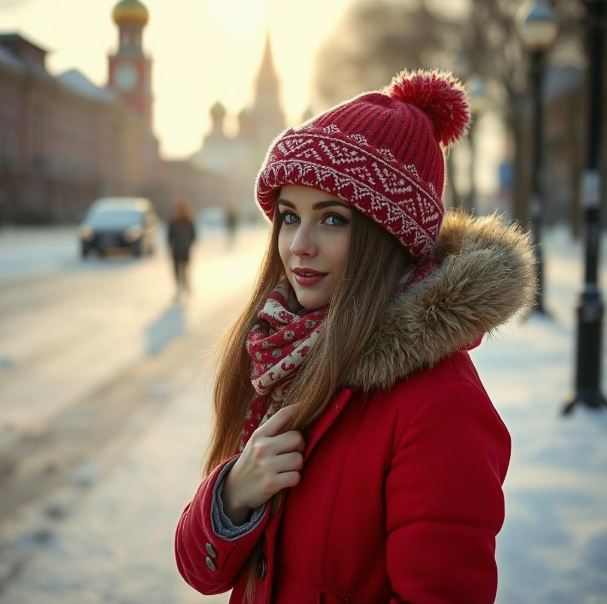
Many people hear “Moscow in winter” and instinctively recoil. Subzero temperatures, fleeting daylight, the image of a grim, frozen capital. But those who have actually been there in the colder months will tell you something different: Moscow’s soul wakes up when the snow falls. When Red Square is blanketed in fresh powder and the colorful domes of St. Basil’s Cathedral wear white caps of snow, the city stops being a stern capital and becomes a vast, living winter fairy tale.
The numbers back this up. In the first half of 2025 alone, Moscow welcomed over 126,000 visitors from the Middle East, and among Chinese tourists, half came specifically for cultural experiences. Winter tourism to Moscow is not a niche survival challenge—it is a thriving, city-wide celebration.
The Whole City Becomes a Winter Playground
The core of Moscow’s winter appeal is a citywide initiative called “Winter in Moscow.” This is not a single attraction but a massive festival network spanning hundreds of venues across the capital. The third season, launching December 1, will unite more than 500 locations, with the majority situated outside the city center—at VDNKh, Gorky Park, Kolomenskoye, Luzhniki, and beyond. The previous season drew 32 million visitors.
For travelers, this means you do not need to hunt for activities. Step out of your hotel and you will likely stumble into a festival square. Near Red Square, on Manezhnaya Square, there is a retro photo studio as part of the “Moscow Estates” festival, while nearby hotels serve “Moscow Tea Time” sets with traditional vatrushka, raspberry marshmallows, and honey cake.
If you visit between late December and mid-January, you hit the peak of the season. A Russian-speaking guide explained it simply: “Since Christmas in Russia is celebrated not on December 25 but in early January, the first days of the year are the most beautiful and event-packed time in Moscow: lots of festivals and concerts. Winter food and drinks are a perfect match for frosty weather. A snowfall turns the streets into a genuine fairy tale.”
Skate on Ice, Then Thaw in a Banya
Muscovites do not “endure” winter—they play in it. This attitude is woven into every corner of the city.
One of Europe’s largest ice rinks sits at VDNKh, framed by the monumental Soviet-era pavilions of the former republics. Gliding there feels like slipping through time. The rink on Red Square offers a different magic: the backdrop is the red wall of the Kremlin and the glowing lights of GUM, and even if you do not skate, standing nearby is worth the trip. For families, husky sled rides in Sokolniki Park are just twenty minutes from the center.
After the ice, the Russian banya is essential. Sit in the steam room for fifteen minutes, get beaten gently with birch branches, then dash into the snow or plunge into an icy pool. It sounds extreme, but those who try it often rank it among the most memorable experiences of their trip. It is a philosophy of turning cold into pleasure.
Warm Up Underground in the World’s Most Beautiful Metro
Moscow’s winter is genuinely cold—average January temperatures hover around minus 9°C, with nighttime lows near minus 12°C. But the city’s response to the cold is remarkably elegant. The Moscow Metro itself is a warm refuge, and one of the world’s most spectacular underground palaces. At Ploshchad Revolyutsii station, the bronze border guard dog’s nose is polished bright by the hands of hopeful passersby. Mayakovskaya station glows with mosaics on its ceiling. Komsomolskaya station feels like a tsarist palace with its crystal chandeliers. For the price of a single metro ticket, you can spend hours underground, warm and immersed in architectural art.
If you prefer to stay above ground, the Pushkin Café is a classic warming stop. Order a glass of sbiten—a traditional honey and spice hot drink—and sit by the window watching the snow fall. Or duck into the glass-roofed GUM department store, where the New Year decorations and the crowd alone are enough to warm you.
Art Carries Extra Weight in Winter
In winter, Moscow’s theaters seem to carry more gravity. The Bolshoi Theatre’s Nutcracker is a fixed fixture of the holiday season—a ballet about a winter fairy tale, performed in an actual winter Moscow. That alignment is something no other season can offer. Even without Russian, Tchaikovsky’s score and the snow on stage tell the story clearly.
Another worthwhile pursuit is the “Moscow Estates” festival. Historic noble mansions open their doors for chamber concerts, craft workshops, and tea gatherings. Sitting in a warm hall, watching snow through frosted windows, is almost a scene lifted from Tolstoy.
The Practical Part: Cold, But Not as Brutal as You Think
Moscow’s average winter temperature is around minus 5°C. For anyone accustomed to northern winters, that is entirely manageable. For visitors from warmer climates, it is fine with the right clothing. The only rule: take warmth seriously. A windproof heavy coat, scarf, gloves, and boots with serious grip are non-negotiable—Moscow ice is unforgiving. Indoor heating is plentiful, so the strategy is layering: bundle up outside, peel off inside.
One more thing to prepare for: winter days are short. The sun sets around 4 p.m. in December and January. But this is precisely when the city is at its most beautiful. The lights come on, snowflakes swirl under the streetlamps, and the outlines of the Kremlin and Red Square are traced in warm gold. Early darkness means early magic—you do not need to stay up late to see Moscow at its most enchanting.
The Verdict
Moscow’s winter is not for everyone. If you hate the cold and want a lazy, comfortable vacation, it is not your first choice. But if you are willing to wrap yourself in a heavy coat, crunch across fresh snow, warm up with a cup of hot honey drink by an ice rink, experience the fire-and-ice ritual of a banya, and then walk into the Bolshoi for The Nutcracker—you will get a Moscow that no other season can give you. The city’s attitude toward winter is itself worth the trip: it does not hide from the cold. It turns the cold into a festival.