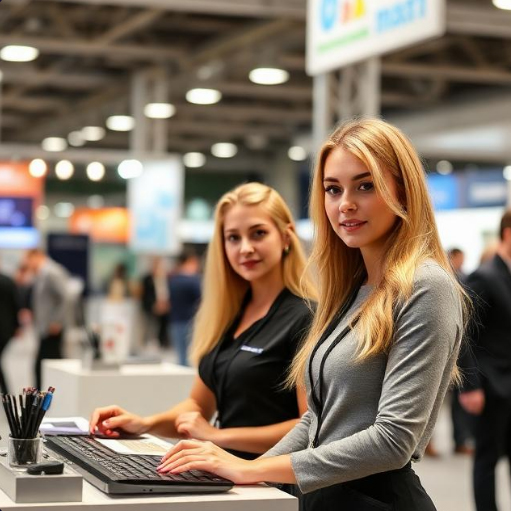
At Moscow’s Crocus Expo and Expocentre, where the heavy steel of automotive service equipment meets the complex machinery of international commerce, a specialized professional ensures that technical specifications, commercial terms, and business relationships translate seamlessly across languages. Service station equipment exhibition interpreters are the precision instruments of the trade fair floor—as carefully calibrated as the diagnostic scanners and alignment systems they help present.
The Stage: Where Russia’s Automotive Aftermarket Comes Together
Russia’s vast road network and massive vehicle fleet support a substantial service station equipment industry. Moscow serves as the hub for major exhibitions connecting manufacturers, distributors, and service station operators across Eurasia.
The premier events in this sector include СТО Expo 2026, held at Crocus Expo from 26 to 29 May 2026, which brings together leading industry players from Russia, Belarus, Turkey, the UAE, and China. The exposition covers the core aftermarket segments: auto parts, lubricants, repair equipment, automotive electronics, batteries, accessories, and specialized software.
Other major events include MIMS Automechanika Moscow, InterAuto Moscow, and Auto+Automechanika Moscow, each drawing hundreds of exhibitors and thousands of industry professionals. At these events, interpreters are not optional extras—they are essential enablers of the commercial and technical exchanges that drive the industry.
The Distinct Challenge of Service Station Equipment Interpreting
Service station equipment exhibitions present unique interpreting challenges that distinguish them from general trade shows:
Technical Terminology Precision
Interpreters must master specialized vocabulary with absolute accuracy. A single mistranslation can lead to equipment being misunderstood or misapplied. Key terms include:
- Diagnostic equipment: стенд развал-схождения (wheel alignment stand), диагностический сканер (diagnostic scanner)
- Repair equipment: стапель (frame straightening machine), окрасочно-сушильная камера (paint booth)
- Service equipment: подъёмник (vehicle lift), шиномонтажный станок (tire changer)
- Software and systems: SaaS management platforms, remote diagnostics, OBD (On-Board Diagnostics) interfaces
Operational Understanding
Interpreters must understand how equipment works in a real workshop environment. They need to explain not just what a machine does, but how it integrates with existing workflows, its operational steps, and its data integration capabilities.
Business Acumen
Conversations at these exhibitions go beyond technical features. Interpreters facilitate discussions about:
- Equipment precision and durability
- Investment payback periods
- Maintenance costs
- Staff training requirements
- Regulatory compliance and certification standards
Audience Complexity
Visitors include technical directors of large service station chains, independent workshop owners, procurement specialists, and fleet managers. Their questions balance technical depth with commercial considerations—interpreters must handle both.
The Interpreter Profile: Skills and Background
The ideal service station equipment interpreter possesses a distinctive combination of attributes:
| Competency | Why It Matters |
|---|---|
| Automotive/Mechanical Background | Understanding of workshop operations and vehicle systems ensures accurate technical communication |
| Technical Interpreting Experience | Prior work with diagnostic equipment, repair tools, or automotive technology companies demonstrates industry familiarity |
| Knowledge of Russian Aftermarket | Awareness of vehicle fleet composition, workshop structures, and purchasing patterns in Russia |
| Quick Learning Ability | Capacity to absorb new product features and explain complex technology in accessible language |
| Business Communication Skills | Ability to assist with product demonstrations, price negotiations, and after-sales service explanations |
A Real-World Case: Interpreting at MIMS Automechanika Moscow
The importance of specialized interpreting is evident at MIMS Automechanika Moscow. Historically, the exhibition has featured a dedicated zone for interpreters within the Chinese national pavilion, offering assistance in conducting negotiations between suppliers from China and Russian companies.
The exhibition has hosted direct B2B negotiations between Chinese suppliers and representatives of procurement networks and wholesale companies, with interpreters playing a central role. This reflects the significant presence of Chinese manufacturers in Russia’s service station equipment market—a trend that continues to drive demand for Chinese-Russian interpreting.
Professional interpreter Anna Svist exemplifies the multilingual capabilities required for these events. With a Master’s degree in linguistics from Moscow State University, she has provided interpreting at MIMS Automechanika Moscow and other major exhibitions, working from Chinese to English and Russian.
Practical Advice for Exhibitors
For international companies planning to exhibit at Moscow’s service station equipment fairs, industry experts recommend:
- Provide comprehensive technical documentation—equipment manuals, operation videos, and technical specification sheets in advance
- Schedule a pre-event briefing—allow the interpreter to work with technical staff to understand equipment highlights and common questions
- Prepare visual aids—equipment diagrams and workflow charts help explain complex functions
- Develop a Q&A guide—prepare answers to anticipated questions about precision, maintenance costs, and training support
- Share a glossary—provide a bilingual list of key terms specific to your products
The service station equipment exhibition interpreter in Moscow is a technical specialist who enables the commercial exchanges that keep Russia’s automotive aftermarket functioning. At events like СТО Expo, where procurement decisions worth significant sums are made, these professionals are not passive translators—they are active participants in business success. By combining technical knowledge, language expertise, and industry awareness, they transform product demonstrations into qualified business opportunities, one precise translation at a time.