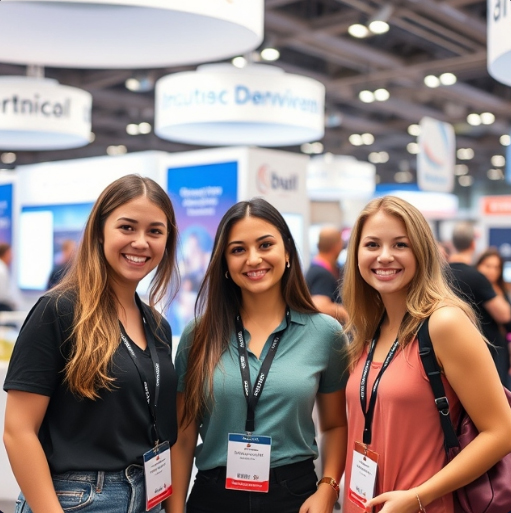
For international exhibitors at Mebel, hiring a Russian interpreter is not a luxury—it is often the single most important investment for turning a stand into a functioning commercial space. The right interpreter bridges not just language, but technical vocabulary, business culture, and the regulatory gap between international products and Russian market requirements.
Why Mebel Demands Specialised Interpreters
Mebel is Russia’s largest furniture trade show, held at Crocus Expo in Moscow. The 2026 edition runs 23–26 November and attracts hundreds of exhibitors from China, Turkey, Italy, and other furniture-exporting nations. For foreign companies, the Russian market offers significant opportunity—but also significant communication challenges.
The furniture industry has its own specialised language. Conversations at a Mebel stand revolve around materials (“массив” for solid wood, “ЛДСП” for laminated particle board, “шпон” for veneer), components (“фурнитура” for fittings), production techniques (“кромкооблицовочный станок” for edge banding machines), and design concepts (“эргономика” for ergonomics, “эко-материалы” for eco-friendly materials). A general translator without industry knowledge can easily miscommunicate specifications, leading to pricing errors or lost deals.
Beyond terminology, Russian buyers often conduct business in Russian. While some speak English, relying on machine translation or a buyer’s second-language skills introduces risk. A local interpreter ensures that product value, design intent, and commercial terms are conveyed accurately.
What Mebel Interpreters Actually Do
A booth interpreter at Mebel is not a passive language converter. Their work spans several distinct functions:
Live interpretation and product explanation. The core task is facilitating conversations between exhibitors and Russian-speaking visitors. This includes explaining product features, materials, and technical specifications, and relaying buyer questions back to the company representative.
Commercial support. Interpreters assist during price negotiations and contract discussions. They help identify serious buyers versus casual browsers, and they summarise key lead information for follow-up after the show.
Technical and regulatory mediation. Russian furniture imports must comply with EAC certification and GOST standards. Interpreters frequently help explain certification requirements and translate technical documentation on the fly.
Cultural navigation. Russian business culture emphasises relationship-building before transactions. A skilled interpreter understands this and can guide foreign exhibitors away from pushing too quickly toward pricing.
Language Pairs in Demand at Mebel
Russian–Chinese is particularly critical. China is Russia’s primary furniture supplier, and Chinese exhibitors make up a significant portion of international participation at Mebel. Interpreters working this pair need to handle both furniture terminology and the specific dynamics of Chinese-Russian trade discussions.
Russian–English remains the most requested combination overall, reflecting English’s role as the working language of international business.
Russian–Turkish is also in steady demand. Turkish furniture manufacturers have a strong presence in the Russian market and at Mebel.
Other language pairs—German, Italian, and others—are available through Moscow-based interpreter agencies.
Rates and Practicalities
Interpreter pricing at Crocus Expo is partially standardised. The venue’s official service guide lists rates for interpreters with European language knowledge at approximately 8,500–11,520 RUB per day, with a minimum booking of four hours. Rates for “eastern” or rare languages are higher.
Independent Moscow interpreter agencies typically quote €120–150 per day for general exhibition interpretation, with minimum bookings of two to three hours. Specialised technical interpreters may charge higher rates. Some Chinese-language services quote approximately $150 per day for exhibition work.
Shifts at major exhibitions like Mebel often run 10–12 hours, from setup through the end of the show day. Budget accordingly.
How to Hire: Official vs. Independent
Exhibitors have two primary routes.
Through Crocus Expo’s official services. The venue provides interpreters directly. This offers a regulated, standardised option with published rates. However, official interpreters may be generalists rather than furniture-industry specialists.
Through independent agencies and freelancers. Moscow has a well-established market of exhibition interpreter agencies, including services specifically advertising Mebel coverage. Many agencies specialise in matching interpreters with technical industries. This route offers more control over selecting an interpreter with furniture-industry background.
What to Look For in a Mebel Interpreter
Industry background matters most. Interpreters with education or experience in furniture manufacturing, wood science, mechanical engineering, or interior design will understand your products faster and translate technical details more accurately.
Exhibition experience is essential. Mebel is a high-pressure environment—multiple conversations, loud background noise, and hundreds of visitors per day. Interpreters who have worked Mebel or similar industrial shows know how to manage this pace.
Test terminology before committing. Before hiring, ask candidates to translate a short list of industry terms relevant to your products: “edge banding machine,” “ergonomic chair,” “medium-density fibreboard,” “eco-friendly certification.” A qualified furniture-industry interpreter should handle these without hesitation.
Book early. The best interpreters for major Moscow exhibitions are reserved weeks or months in advance. For Mebel 2026, begin your search at least three to four weeks before the show, and earlier if you need a specialised language pair.
Preparing Your Interpreter for Success
An interpreter performs far better when properly briefed. Before the exhibition, provide:
- A company profile and full product list
- Technical specifications and certification documents (EAC, GOST, etc.)
- Key talking points and preferred terminology in both languages
- A list of common questions you expect from Russian visitors
- Clear instructions on what lead information to collect
A well-prepared interpreter becomes a genuine commercial asset rather than a passive language bridge.
The Bottom Line
For international exhibitors at Mebel, a Russian interpreter is the operational key to the stand. They translate the technical language of furniture, navigate the regulatory landscape, and build the trust that Russian B2B relationships require. The investment in a qualified, industry-aware interpreter is not an expense—it is the mechanism that makes everything else at the exhibition work.