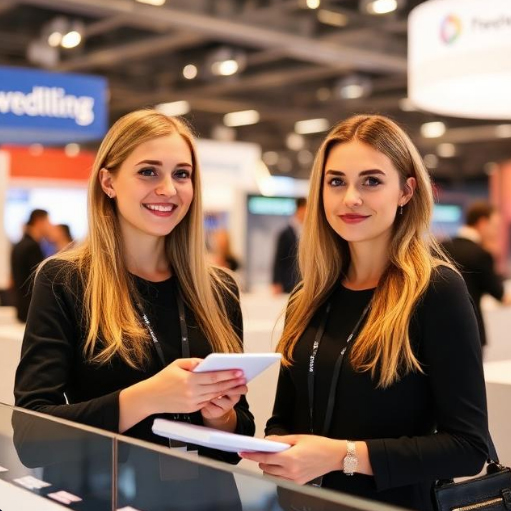
Metal-Expo, held annually in St. Petersburg, brings together over 600 companies from Russia, China, India, Iran, Turkey, and beyond. For international exhibitors and visitors, professional Russian interpreters are not merely a convenience—they are an operational necessity. Whether negotiating steel supply contracts, presenting equipment specifications, or navigating visa and logistics on the ground, effective communication determines the success of every business trip.
Why Russian Interpreters Matter at Metal-Expo
The exhibition serves as a meeting point for the ferrous and non-ferrous metallurgy sectors, engineering companies, and manufacturers of steel structures. While many Russian industry professionals possess some English proficiency, substantive negotiations—particularly those involving technical specifications, pricing terms, and delivery schedules—are almost always conducted in Russian. A skilled interpreter ensures that nuances are not lost, that technical terminology is rendered accurately, and that both parties leave the table with a clear understanding of what was agreed.
For Chinese companies, which represent a significant and growing share of Metal-Expo participants, Russian-Chinese interpretation is especially critical. A recent example from St. Petersburg State University illustrates this need: a master’s student in intercultural communication provided consecutive interpretation for a Taiyuan technology company exhibiting at Metal-Expo, facilitating discussions around heavy industrial equipment including welded pipe production lines and metal processing machinery.
Types of Interpretation Services Available
Consecutive interpretation is the most common format at trade shows. The interpreter listens to a speaker, takes notes, and then delivers the message in the target language. This works well for booth conversations, business negotiations, and technical discussions.
Simultaneous interpretation is required for conferences, seminars, and formal presentations. This is more demanding and typically involves specialized equipment, though some interpreters offer simultaneous services without equipment for smaller settings.
Escort interpretation covers airport pickup, hotel check-in, city navigation, and accompaniment during off-site meetings or factory visits. Many interpreters in St. Petersburg offer this as part of a comprehensive support package.
Finding Qualified Interpreters in St. Petersburg
Several channels exist for securing professional interpretation at Metal-Expo.
Exhibition organizers and booth service providers often facilitate translation bookings as part of their exhibitor support packages, covering everything from invitation letters and visa assistance to fair translation reservations.
Freelance interpreter platforms connect clients directly with professionals. Rates in St. Petersburg typically range from €35 per hour to €155 per day for standard business and technical interpretation, with surcharges for urgent orders (within 24 hours) and evening assignments.
Specialized agencies maintain databases of native Russian interpreters, sales staff, and trade show assistants available across Moscow and St. Petersburg. These services are designed for business meetings, negotiations, and conferences, and are priced competitively.
University programs represent another source. St. Petersburg State University’s Faculty of Foreign Languages, for instance, has supplied student interpreters for Metal-Expo, particularly for Chinese-Russian language pairs.
What to Look For in a Metal-Expo Interpreter
Metallurgy is a technically demanding field. An interpreter with general business language skills may struggle with terms like “continuous hot-dip galvanising line,” “electric steelmaking complex,” or “seamless aluminium tube extrusion.” When selecting an interpreter, prioritize candidates with documented experience in heavy industry, engineering, or manufacturing. One St. Petersburg-based interpreter lists metallurgy, IT, robotics, and automation among his fields of expertise, having worked with major industrial enterprises. Another has provided technical interpretation for oil and gas, nuclear technology, and heavy industry sectors.
Language combinations matter as well. While Russian-English is the most common pairing, Russian-Chinese, Russian-German, and Russian-French interpreters are also available. Verify that your interpreter’s language pair matches your needs before booking.
Finally, consider whether you need written translation support alongside oral interpretation. Product brochures, technical manuals, and contract documents often require professional translation, and some interpreters offer both services.
Practical Considerations
Book interpreters well in advance of Metal-Expo. The autumn Metals Week in St. Petersburg is a busy period, and the most experienced interpreters are reserved months ahead. A minimum order of three hours is standard, and evening work may incur additional transport costs.
For companies planning sustained engagement in the Russian market, establishing a relationship with a reliable interpreter before the exhibition pays dividends. The same professional who assists at your booth can later support factory visits, supplier audits, and follow-up negotiations.
In a sector where precision matters—whether in steel grades, delivery terms, or equipment specifications—the investment in professional Russian interpretation is one of the highest-return decisions an international participant can make at Metal-Expo.