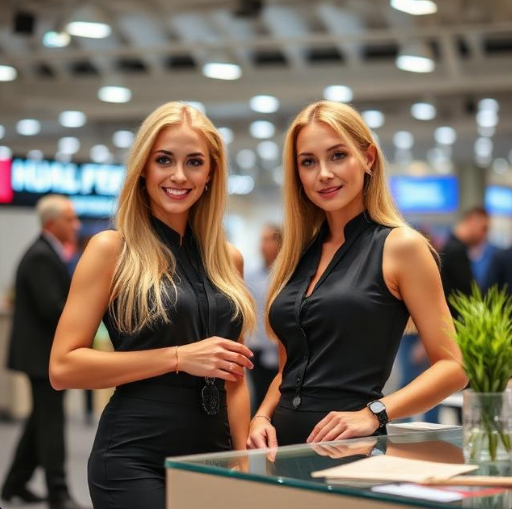
At Moscow’s Crocus Expo, VDNKh, and Skolkovo, where humanoid robots greet visitors and autonomous systems demonstrate their capabilities, a specialized professional works behind the scenes to make global communication possible. Robotics industry trade show interpreters are the essential human link between international manufacturers and Russia’s growing robotics market, translating not just words but the complex technical concepts that define this cutting-edge field.
An Expanding Robotics Exhibition Landscape
Moscow’s robotics exhibition scene has grown significantly, driven by government support and a thriving innovation ecosystem. Major venues host robotics-focused events and exhibitions, including the International Scientific and Technological Forum “Robotics, Machine Intelligence and Mechanisms” (RIMM-2026) , held at the Lomonosov cluster in Moscow with support from the Ministry of Industry and Trade. The “RoboMoscow” interactive space at Skolkovo’s Startup Village features over 30 different robots on display. Even specialized events like INTERPOLITEX 2026 (24-26 November at VDNKh) include dedicated sections for robotics, UAVs, and drone solutions. The ROBOSITI 2026 festival, running from February to April 2026, brings together 250-300 teams from across Russia, attracting thousands of visitors.
This expanding landscape creates consistent demand for interpreters who can navigate the technical complexity of the robotics field.
The Distinct Challenge of Robotics Interpreting
Robotics interpreting presents unique challenges that distinguish it from general trade show work. As one Moscow-based interpreter profile notes, robotics expertise is a specialized category alongside IT, marketing, and high technology.
Technical Terminology Mastery
Robotics draws from multiple technical disciplines, each with its own terminology. Professional translation agencies in Moscow maintain specialized glossaries for robotics, covering:
| Category | Key Terminology |
|---|---|
| Industrial Robotics | Manipulation, CNC systems, computer vision algorithms, welding robots, assembly automation |
| Service Robotics | Medical robots, logistics robots, robot-assistants, voice recognition, navigation, AI algorithms |
| Software & AI | Machine learning, neural networks, YandexGPT, computer vision, object tracking |
| Hardware & Control | Sensor systems, telemetry, remote control interfaces, immersive control interfaces |
Interpreters must understand how these systems work in real-world applications, not just translate terms. As one translation bureau explains, robotics is “closely related to electronics, mechanics, cybernetics, mechatronics, and computer science,” and each field requires “unique terminology” and “deep understanding of context”. This is why many robotics translators have “specialized education or work experience in engineering and IT fields”.
Types of Interpreting Services
Robotics trade show interpreters work across multiple formats:
- Booth Interpreting: Standing with exhibitors to assist with product demonstrations, answering technical questions from visitors, and facilitating conversations with potential buyers. This format is common at events like Metalloobrabotka (machinery and robotics) and other industrial automation exhibitions .
- Consecutive Interpreting: Supporting one-on-one meetings where manufacturers discuss technical specifications, pricing, and integration with Russian distributors. One interpreter advertising for the May 2026 exhibition season specifically highlights services for “booth interpretation, negotiation interpretation, factory visits, and business meetings” .
- Simultaneous Interpreting: Required for conferences and panel discussions. One Moscow interpreter with robotics interpreting experience has worked simultaneously for three days at the Skolkovo Innovation Center’s “Open Innovations” event, covering topics including IT and robotics.
Key Industry Events Requiring Interpreters
| Event | Focus | Timeline |
|---|---|---|
| ROBOSITI 2026 | Educational robotics, competitions, exhibitions for youth and students | Feb-Apr 2026 |
| RIMM-2026 | Scientific-technological forum on robotics, machine intelligence | Feb 2026 |
| Metalloobrabotka 2026 | Machine tools, metalworking, industrial automation, robotics | May 2026 |
| INTERPOLITEX 2026 | Security tech incl. robotics, UAVs, drones | Nov 2026 |
The Language Pair Landscape
While English-Russian remains the standard requirement, the robotics industry draws global participation. Chinese manufacturers are notably present at industrial exhibitions in Moscow, and interpreters regularly handle Chinese-Russian assignments at trade shows covering industrial automation, robotics, and 3D printing . The presence of companies like Unitree Robotics at international events in the region further underscores the need for Chinese language support.
The Professional Profile
An effective robotics exhibition interpreter should possess:
- Technical Background: Familiarity with engineering, IT, mechatronics, or related fields. Translation agencies note that robotics translators often have “specialized education or work experience in engineering and IT spheres”.
- Glossary Preparation: Professional translation bureaus develop “industry glossaries” covering CNC systems, computer vision algorithms, and AI applications to ensure consistent terminology across assignments.
- Real-Time Processing: The fast pace of exhibition floors demands quick thinking and the ability to handle technical questions from audiences ranging from students to industry professionals.
- Commercial Acumen: Understanding of B2B sales processes, integration discussions, and procurement frameworks in Russia’s industrial sector.
- Cultural Awareness: Russian business culture values direct dialogue with technical experts, and interpreters facilitate this connection.
Practical Advice for Exhibitors
For international robotics companies planning to exhibit in Moscow:
- Book early – Major events have overlapping dates (e.g., multiple industrial shows in May) and interpreters recommend advance booking .
- Provide technical materials in advance – Product catalogs, technical specifications, and presentation materials should be shared before the event for preparation.
- Schedule a pre-event briefing – Allow the interpreter to work with technical staff to understand product highlights and common questions.
- Share a glossary – A bilingual glossary of key terms specific to your robotics products helps ensure consistency.
- Consider venue logistics – Major venues like Crocus Expo and VDNKh see high traffic, and interpreters who know these venues can help with logistics and crowd management.
As Moscow positions itself as a hub for robotics innovation, with events showcasing everything from industrial automation to humanoid service robots, the role of the robotics trade show interpreter has become a strategic necessity. These professionals are not passive translators but active participants in business success. By combining technical knowledge, language expertise, and industry awareness, they transform complex robotics demonstrations into qualified business opportunities, one precise translation at a time. In the high-stakes world of robotics exhibitions, the interpreter is often the key to ensuring that technical dialogue translates into commercial success.