In the vast industrial halls of Moscow’s Expocentre, where the roar of metallurgy meets the precision of engineering, the professional interpreter is an indispensable asset. For any international company aiming to succeed at Metal-Expo, Russia’s largest and most prestigious trade fair for the steel and metalworking industry, securing expert linguistic support is not a luxury—it is a strategic imperative.
Metal-Expo is the premier event for the metallurgical and metalworking industry in Russia and the CIS, having been held annually since 1995. The 2025 edition featured over 600 exhibitors from more than 30 countries, including national pavilions from China, Germany, and Turkey, and attracted over 35,000 professional visitors across 40,000 square meters of exhibition space. With attendees including top executives from major steel producers, construction companies, and engineering firms, the exhibition is a high-stakes environment where a single conversation can lead to multi-million dollar contracts. In this arena, the interpreter serves as the essential gateway to the Russian market.
The Specialised Vocabulary of Metallurgy and Metalworking
A standard translator is insufficient at Metal-Expo. The event’s attendees are not casual visitors; they are metallurgists, rolling mill engineers, quality control specialists, procurement managers, and C-suite executives. They speak the specialised language of steel grades, rolling processes, heat treatment, coating technologies, and structural integrity testing.
A professional Metal-Expo interpreter must, therefore, be more than a linguist—they must be a technical bridge-builder capable of:
- Clearly explaining product specifications, chemical compositions, and mechanical properties to discerning Russian buyers.
- Navigating complex discussions about GOST standards, certification requirements, and compliance with Russian regulatory frameworks.
- Facilitating technical conversations about innovations in continuous casting, hot and cold rolling, galvanizing, and high-strength steel development.
For instance, if a manufacturer is showcasing a new corrosion-resistant steel grade or an advanced coating technology, a general translator might struggle with concepts like yield strength, fatigue resistance, or galvanic corrosion, whereas a specialist with metallurgical vocabulary would ensure precise and effective communication.
The Cultural Bridge: Fostering Trust in the Russian Market
Technical knowledge is only part of the equation. Doing business in Russia requires cultural intelligence, and this is where a skilled local interpreter adds immense value.
- Navigating Business Culture: Russian business culture in the heavy industrial sector is formal, relationship-driven, and detail-oriented. Buyers may require lengthy, in-depth discussions before committing to a new supplier. An experienced and patient interpreter serves as the bridge, facilitating this trust-building process.
- Engaging Key Decision-Makers: With thousands of professional visitors including top executives from major corporations, the interpreter must be adept at engaging with senior management and government representatives.
- Qualifying Leads: The interpreter often acts as a sophisticated gatekeeper, distinguishing between a casual inquiry and a serious lead from a major industrial client. They can provide preliminary technical answers, ensuring that valuable time is spent on the highest-potential prospects.
A Strategic Investment, Not an Overhead Cost
For international companies, particularly those from China, Germany, Turkey, and other non-Russian speaking nations, a professional interpreter is essential for navigating the Russian market. Metal-Expo is recognised as the most authoritative event for the Russian steel and metalworking sector, covering the entire industry chain—from raw materials and steelmaking to processing and finished products. The 2025 edition generated substantial business opportunities across key industry segments. Effective communication is the catalyst that turns these opportunities into closed deals.
Similarly, Russian steel producers and metalworking companies often require interpreters to effectively engage with international partners, showcasing their products and establishing export channels.
Choosing the Right Interpreter for Metal-Expo
When sourcing an interpreter for Metal-Expo, companies should look for professionals with a background in metallurgy, materials science, mechanical engineering, or a related technical field. The role demands more than linguistic ability; it requires the confidence and specialised vocabulary to engage in substantive technical and commercial discussions.
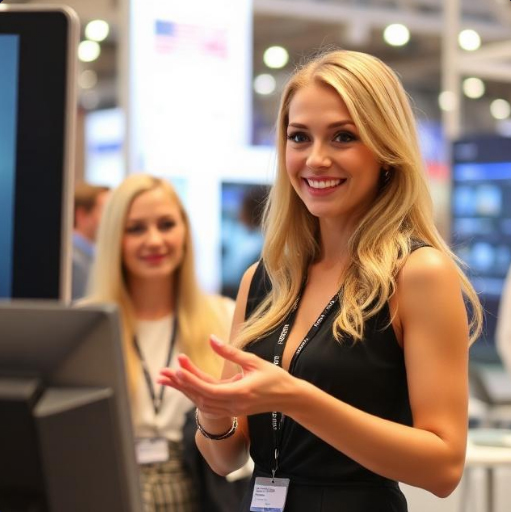
Many exhibitors seek booth assistants or hostess interpreters who are not only fluent in the necessary languages (such as English, Russian, German, Chinese, and Turkish) but are also skilled in customer engagement, serving as the welcoming face of the brand. Professional interpreters with proven exhibition experience bring valuable familiarity with the event’s dynamic environment.
In conclusion, the interpreter at Metal-Expo is the cornerstone of effective cross-cultural and cross-technical communication. They ensure that a company’s message is not just translated, but truly understood and respected, transforming a conversation into a signed contract in Russia’s vital metallurgical industry.
