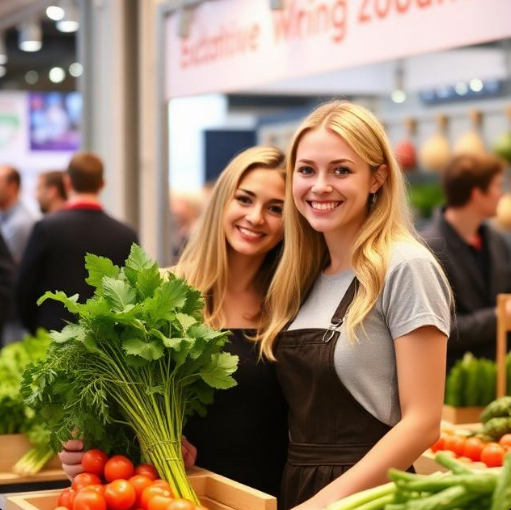
In the bustling halls of Moscow’s Gostiny Dvor, where the scent of fresh produce mingles with the intensity of high-stakes business negotiations, the professional interpreter is an invaluable asset. For any international company aiming to succeed at Global Fresh Market (GFM) , Russia’s premier B2B exhibition for the fruit and vegetable industry, securing expert linguistic support is not an afterthought—it is a strategic imperative.
Global Fresh Market: Vegetables & Fruits is Russia’s flagship event for the fresh produce sector, organized by the National Union of Fruit and Vegetable Producers under the auspices of the Ministry of Agriculture of the Russian Federation. Scheduled for November 2026 in Moscow, this federal-scale exhibition brings together producers, processors, suppliers, and technology providers from across the industry. As the largest and most professional fresh produce industry event in Russia and the CIS region, GFM draws hundreds of exhibitors from nearly 40 countries and tens of thousands of B2B visitors, including major retail buyers and supply chain professionals. In this environment, where a single conversation can lead to a multi-million dollar deal, the interpreter is the key that unlocks the market.
The Specialized Vocabulary of Fresh Produce
A standard translator is insufficient at Global Fresh Market. The event’s attendees are not casual visitors; they are procurement specialists for major retail chains, logistics experts, and agronomists. They speak the specialized language of post-harvest treatment, modified atmosphere technology, phytosanitary certification, and cold chain logistics.
A professional GFM interpreter must, therefore, be more than a linguist—they must be a sector-savvy communicator capable of:
- Clearly explaining product specifications, shelf-life parameters, and quality assurance protocols to discerning Russian buyers.
- Navigating complex regulatory requirements, such as Russian phytosanitary standards and import certification—critical “hard thresholds” for entering the market.
- Facilitating technical discussions about innovations in equipment, such as irrigation systems, climate control, grading, and packaging machinery.
For instance, if an international exhibitor is showcasing a new berry variety with extended shelf-life, a general translator might fail to accurately convey the nuances of modified atmosphere packaging or the specifics of temperature-controlled transport, whereas a specialist with agricultural or food science vocabulary would ensure precise and effective communication.
The Cultural Bridge: Fostering Trust in the Russian Market
Technical knowledge is only part of the equation. Doing business in Russia requires cultural intelligence, and this is where a skilled local interpreter adds immense value.
- Navigating Business Culture: Russian business culture is often formal, relationship-driven, and detail-oriented. Buyers may require lengthy, in-depth discussions before committing to a new supplier. An experienced and patient interpreter serves as the bridge, facilitating this trust-building process.
- Ensuring Professionalism: The correct use of formal titles and respectful address is crucial. A local interpreter understands the importance of using a client’s first name and patronymic, demonstrating respect and cultural fluency.
- Qualifying Leads: The interpreter often acts as a sophisticated gatekeeper, distinguishing between a casual inquiry and a serious lead from a major retail chain or distributor. They can provide preliminary answers, ensuring that valuable time is spent on the highest-potential prospects.
A Strategic Investment, Not an Overhead Cost
For international companies, particularly those from China, India, and other non-Russian speaking nations, a professional interpreter is essential for navigating the Russian market. Walking into Global Fresh Market without capable linguistic support is a significant missed opportunity. The event is recognized as a core gateway to the Russian and Eurasian Economic Union markets, with the previous edition generating substantial on-site trade. Effective communication is the catalyst that turns these opportunities into closed deals.
Similarly, Russian producers and technology providers often require interpreters to effectively engage with international partners, showcasing their innovations and establishing export channels.
Choosing the Right Interpreter for Global Fresh Market
When sourcing an interpreter for Global Fresh Market, companies should look for professionals with a background in agriculture, food science, or a related technical field. The role demands more than linguistic ability; it requires the confidence and specialized vocabulary to engage in substantive technical and commercial discussions. Additionally, many exhibitors seek booth assistants or hostesses who are not only fluent in the necessary languages (such as English, Russian, and Chinese) but are also presentable and skilled in customer engagement, serving as the welcoming face of the brand.
In conclusion, the interpreter at Global Fresh Market is the cornerstone of effective cross-cultural and cross-technical communication. They ensure that a company’s message is not just translated, but truly understood and respected, transforming a conversation into a signed contract.